
Recreational marijuana is illegal in Wisconsin and is legal only in very specific medical situations, while Delta-8 and Delta-9 THC products fall into a legal gray area that can sometimes lead to criminal drug charges. Even when products seem legal under federal law, Wisconsin law often treats cannabis much more seriously. Understanding these differences can help you avoid serious legal trouble.
If you’re facing marijuana possession or THC-related charges, speaking with one of our criminal defense attorneys at Kim & LaVoy S.C. can help you get clear answers and protect your future.
Marijuana Laws in Wisconsin
While many states across the nation have moved toward legalization, marijuana remains illegal under Wisconsin law. Recreational marijuana is not permitted, and medical cannabis access is still extremely limited.
This means:
- Marijuana possession is still a criminal offense
- Recreational use is prohibited
- Growing, selling, or distributing cannabis is charged as a felony
- THC is treated as a controlled substance
Some cities and counties have chosen to ease penalties for small amounts of marijuana possession, which can make it feel like the law is changing. Madison is one of several Wisconsin jurisdictions that has reduced local penalities for limited amounts, while places like Milwaukee and Green Bay have also adopted local decriminalisation or civil forfeiture approaches. [source]
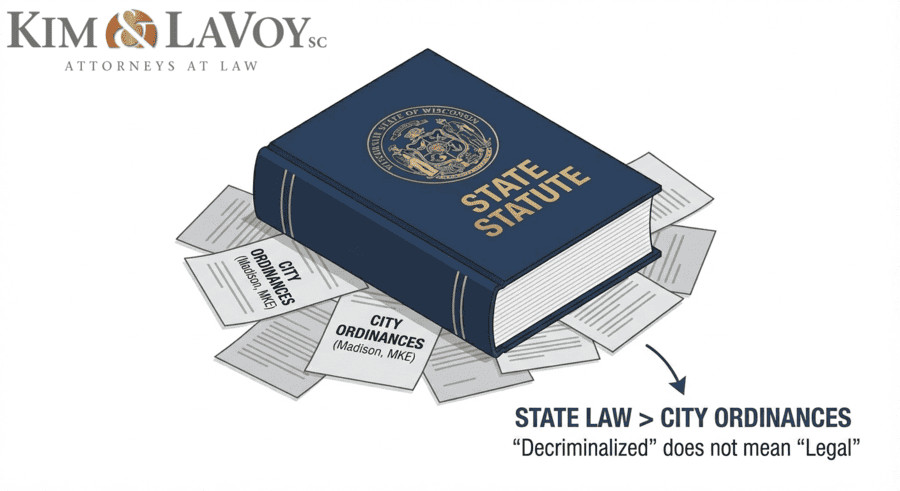
Even with these local adjustments, Wisconsin law still applies statewide, meaning marijuana possession can still lead to criminal charges under state statutes.
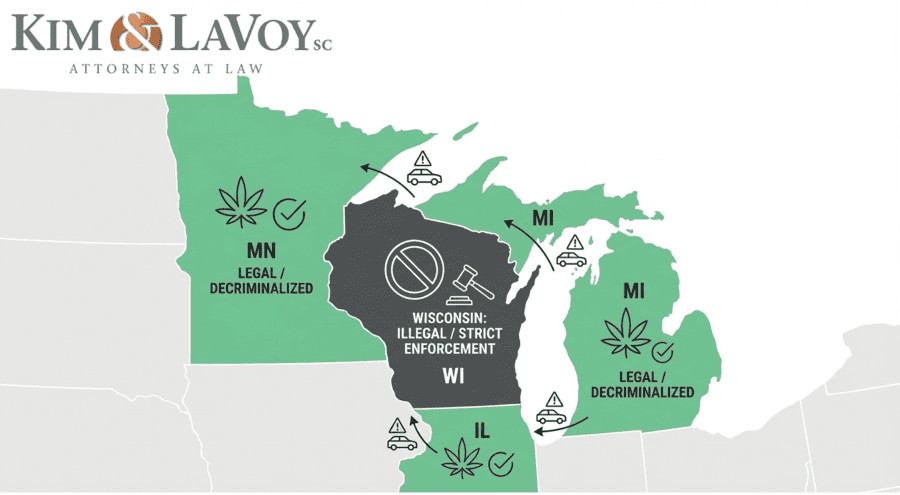
Because neighboring states have legalized marijuana, many Wisconsin residents naturally assume the law has changed here, too. That assumption leads to widespread confusion.
So Is Marijuana & Delta-8 & 9 Legal in Wisconsin or Not?
It’s completely understandable why so many people feel uncertain about cannabis laws today. With legalization spreading across the nation and hemp products filling store shelves, it often feels like marijuana and THC products must be legal by now.
We see a lot of people asking:
- Is weed legal in Wisconsin?
- Is Delta-8 legal in Wisconsin?
- Is Delta-9 legal in Wisconsin?
The reality is that marijuana remains illegal statewide. While Delta-8 and Delta-9 products are widely marketed, they can still carry legal risks depending on THC content, how they’re made, and how Wisconsin law applies. Let’s take a deeper look.
Delta-8 vs. Delta-9 THC
Delta-9 THC is the primary psychoactive compound found in the cannabis plant and marijuana. It’s responsible for the effects most people associate with recreational use. [Source]
Delta-8 THC is usually created from CBD through a heating or chemical process. Although it’s often marketed as milder, it still produces psychoactive effects and frequently shows up on drug tests the same way Delta-9 does. [Source]
From a legal standpoint, both can lead to criminal charges.
Where Do Delta-8 and Delta-9 Come From?
Delta-9 naturally occurs in marijuana and hemp plants. Delta-8 is typically derived from legal hemp and then processed into oils, gummies, and edibles.
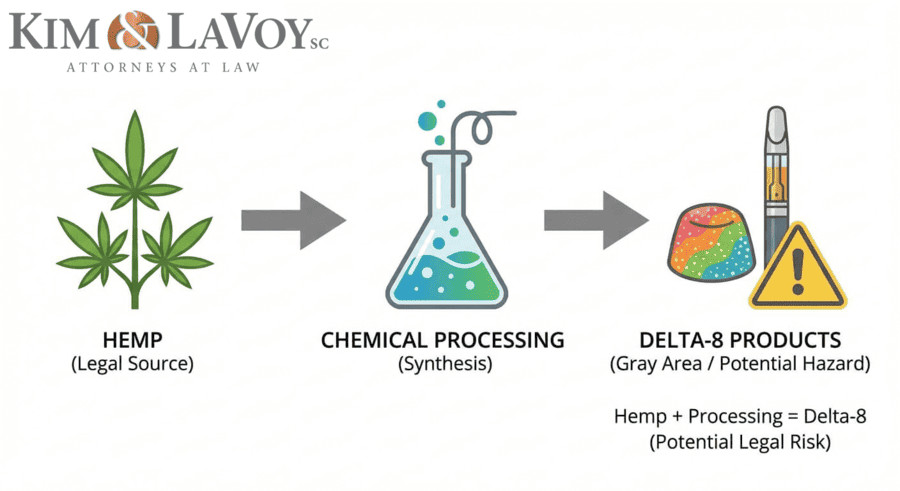
Federal law allows hemp products when THC content stays below 0.3 percent on a dry weight basis.
This opened the door to CBD oil, hemp edibles, and synthetic THC products appearing across Wisconsin.
However, Wisconsin law still restricts THC in many situations, regardless of where it comes from.
Charges If Found in Possession
Many people are surprised to learn that possession of THC products can still result in:
- Misdemeanor charges
- Felony charges for repeat offenses
- Jail time
- Significant fines
- Additional penalties like license suspension
If you’re unsure whether a THC product is legal in your situation, call for a free consultation today at (414) 257-2100.
Delta-8, Delta-9, Hemp, and the Legal Gray Area
The legalization of industrial hemp at the federal level created space for CBD products and hemp-derived THC items to enter the market. But Wisconsin law continues to regulate cannabis and THC much more strictly.
This creates confusion because:
- Products sold legally may still trigger criminal penalties
- THC testing often doesn’t distinguish hemp from marijuana
- Federal law does not override Wisconsin law
- Local decriminalization does not mean legal
Until legislation changes, marijuana remains illegal in Wisconsin, and THC-related products still carry legal risks.
Marijuana Charges and Penalties in Wisconsin
Even small amounts of marijuana can lead to serious consequences under Wisconsin law.
Marijuana Possession Penalties
| Offense | Charge | Possible Jail Time | Maximum Fine |
|---|---|---|---|
| First offense (any amount) | Misdemeanor | Up to 6 months | Up to $1,000 |
| Subsequent offense | Felony | Up to 3.5 years | Up to $10,000 |
| Possession with intent to sell (max penalties depend on amount) | Felony | Up to 15 years | Up to $50,000 |
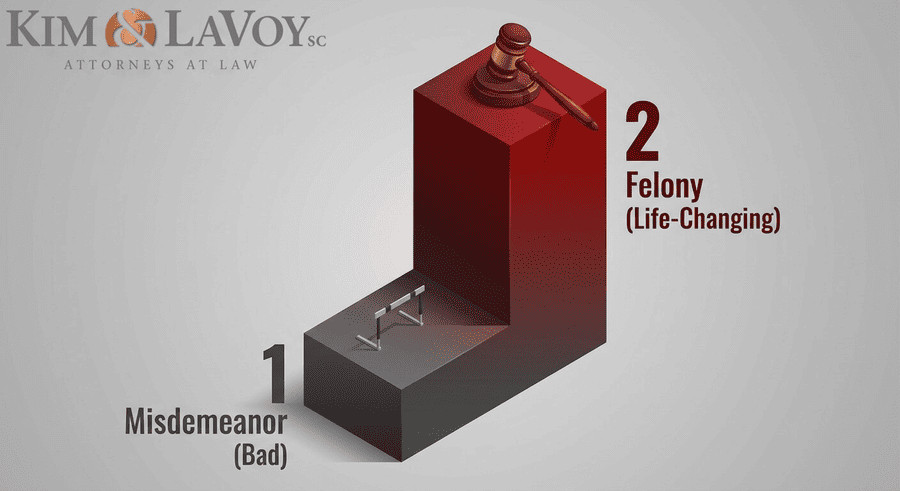
A first offense may seem minor, but it creates a permanent criminal record.
Selling or Distributing Marijuana
| Amount | Charge | Prison Time | Fine |
|---|---|---|---|
| 200 grams or less | Class I Felony | Up to 3.5 years | $10,000 |
| 200–1,000 grams | Class H Felony | Up to 6 years | $10,000 |
| 1,000–2,500 grams | Class G Felony | Up to 10 years | $25,000 |
| 2,500–10,000 grams | Class F Felony | Up to 12.5 years | $25,000 |
| Over 10,000 grams | Class E Felony | Up to 15 years | $50,000 |
Growing Marijuana (Cultivation)
| Plants | Charge | Prison Time | Fine |
|---|---|---|---|
| Up to 4 plants | Felony | Up to 3.5 years | $10,000 |
| 5–20 plants | Felony | Up to 6 years | $10,000 |
| 21–50 plants | Felony | Up to 10 years | $25,000 |
| 51–200 plants | Felony | Up to 12.5 years | $25,000 |
| Over 200 plants | Felony | Up to 15 years | $50,000 |
Paraphernalia Charges
Possession of pipes, bongs, vape pens, or growing equipment can result in misdemeanor charges, short jail time, and fines. Selling paraphernalia carries even stronger penalties.
Why Confusion Around Legalization Keeps People Getting Arrested
With marijuana legal in many states, hemp products sold openly, and national conversations around reform, many people genuinely believe cannabis is no longer a legal issue.
In Wisconsin, that misunderstanding continues to lead to arrests.
People are charged because they:
- Trust product labels
- Assume federal law overrides state law
- Believe decriminalization equals legality
- Bring marijuana from legal states into Wisconsin
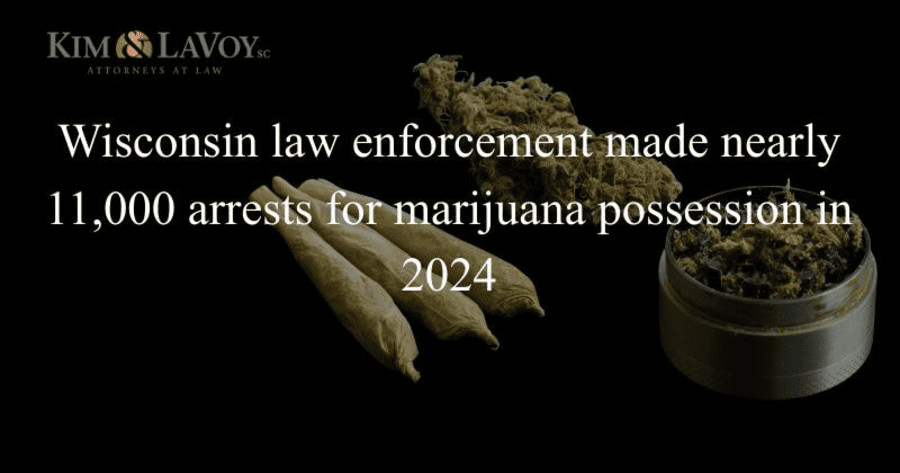
Because of this confusion, many people across Wisconsin find themselves facing cannabis-related criminal charges each year, often without realizing they were breaking the law. Recent data shows that Wisconsin law enforcement made nearly 11,000 arrests for marijuana possession in 2024 alone, with well over 130,000 possession arrests over the past decade. For many individuals, a criminal record can follow them long after the case ends, creating real challenges when applying for jobs, professional licenses, or housing. [Source]
Julius Kim on Wisconsin’s Cannabis Laws
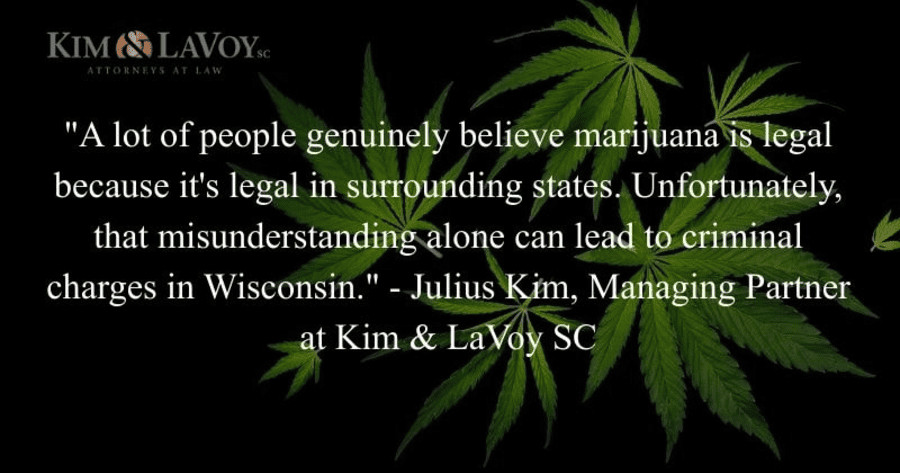
Julius Kim, Managing Partner at Kim & LaVoy, often meets clients who never expected to face criminal charges over marijuana or THC products.
“A lot of people genuinely believe marijuana is legal because it’s legal in surrounding states. Unfortunately, that misunderstanding alone can lead to criminal charges in Wisconsin.”
He also explains how hemp and Delta-8 products create unexpected risks:
“Products labeled as hemp or Delta-8 often feel safe to people, but when THC is involved, Wisconsin law can still treat it very seriously. Getting clear legal guidance early can make a big difference.”
Our team understands the impact that getting charged for marijuana can have on a person’s life, which is why we take a human-first approach and build a strong legal defense to help protect our clients and their future.
If you’re facing marijuana or THC-related charges, call for a free consultation today at (414) 257-2100.
Summary
Marijuana remains illegal in Wisconsin for recreational use and most medical purposes. Delta-8 and Delta-9 THC products continue to fall into a legal gray area that can still lead to criminal charges, even when purchased legally elsewhere. Until Wisconsin law changes, cannabis-related substances still carry real legal consequences.
If you have questions or are facing charges, call Kim & LaVoy for a free consultation at (414) 257-2100 to get clear guidance and support.
Frequently Asked Questions
Is medical marijuana or medical cannabis legal in Wisconsin?
Medical marijuana is still very limited in Wisconsin, and the Wisconsin Legislature has not yet approved full medical cannabis programs. While some bills have been introduced by GOP lawmakers, marijuana for most medical use remains illegal aside from very specific CBD oil options in oil form.
Is recreational marijuana legal anywhere in Wisconsin?
Recreational marijuana is not legal under Wisconsin law, even though some local jurisdictions have reduced penalties for small amounts of possession. While other cities may handle minor cases differently, marijuana remains illegal statewide.
How does industrial hemp affect CBD oil and THC products in Wisconsin?
Industrial hemp is legal under federal law, which is why CBD oil products are sold across Wisconsin. However, THC created through a heating process or chemical conversion can still raise legal issues under state law.
Can I face criminal charges in Green Bay for marijuana possession?
Yes, people can still face criminal charges in Green Bay, even though some cities have reduced fines for minor possession. Wisconsin law applies statewide, and local policies do not fully protect a person from charges.
Can a property owner restrict marijuana use even if laws change?
Yes, a property owner can prohibit marijuana possession or use on private property regardless of local policies or future bills. Even if laws evolve, private rules and enforcement can still apply.
Legal Disclaimer
The information provided in this article is for general informational purposes only and does not constitute legal advice. Every criminal case is unique, and the facts of your specific situation may result in different outcomes than those described here. Reading this content does not create an attorney-client relationship between you and Kim & LaVoy S.C. or any of its attorneys. Wisconsin law is complex and subject to change. For legal advice tailored to your individual circumstances, please contact Kim & LaVoy S.C. directly to schedule a consultation.