
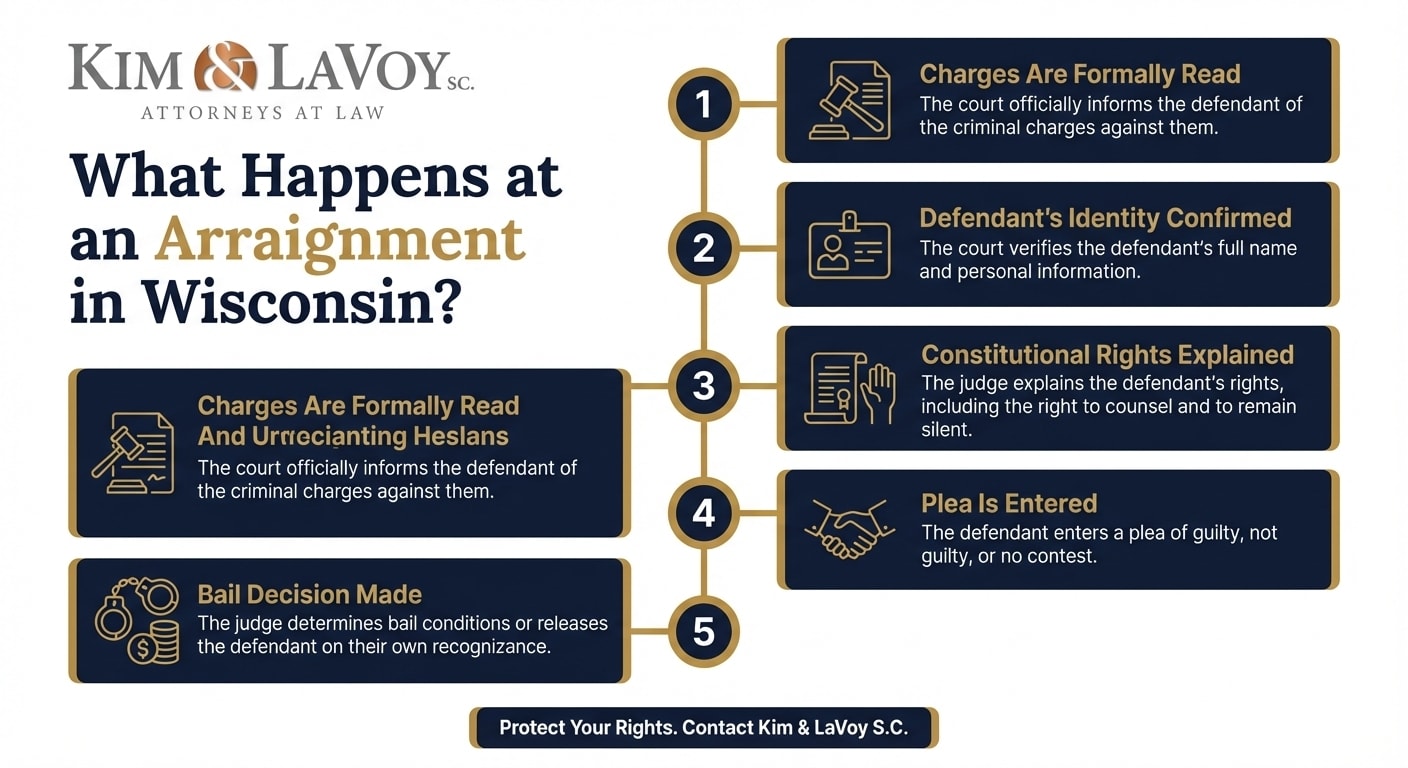
An arraignment is where the court formally tells you the charges against you and asks you to enter a plea so your criminal case can move forward. Many people preparing for an arraignment hearing feel unsure about what will happen or how much this step really matters.
These legal proceedings can be a little daunting at first, especially if this is your first time. Listen to your attorney. Trust that they have your best interests at heart, and ask questions. Be honest about your feelings and allow your attorney to guide you through your arraignment.
The simple fact is that understanding arraignment rules in Wisconsin can help you feel steadier, informed, and supported during a stressful time.
Julius Kim, managing partner at Kim & LaVoy S.C., explains, “As soon as you are in the system, decisions start being made around you. Our job is to slow that moment down, make sure you understand what is happening, and help you make choices with a clear head.”
If you or a loved one is preparing for an arraignment hearing, speak with one of our criminal defense attorneys at Kim & LaVoy S.C. to help you understand your rights and your next steps. Call Kim & LaVoy S.C. at (414) 257-2100 for a free consultation.
Arraignment Rules
- An arraignment hearing is where formal charges are read, and you enter a plea.
- Most defendants enter a not guilty plea so that evidence can be reviewed.
- The judge may set bail or release you on your own recognizance. [Source]
- The court explains your constitutional rights at this stage.
- Felony cases often move from a preliminary hearing to an arraignment.
- Having a lawyer present helps protect your rights from the start.
What Is an Arraignment?
Most people have heard the word arraignment but are not completely sure what actually happens during this step. Understanding the difference between early court hearings helps remove some of that uncertainty.
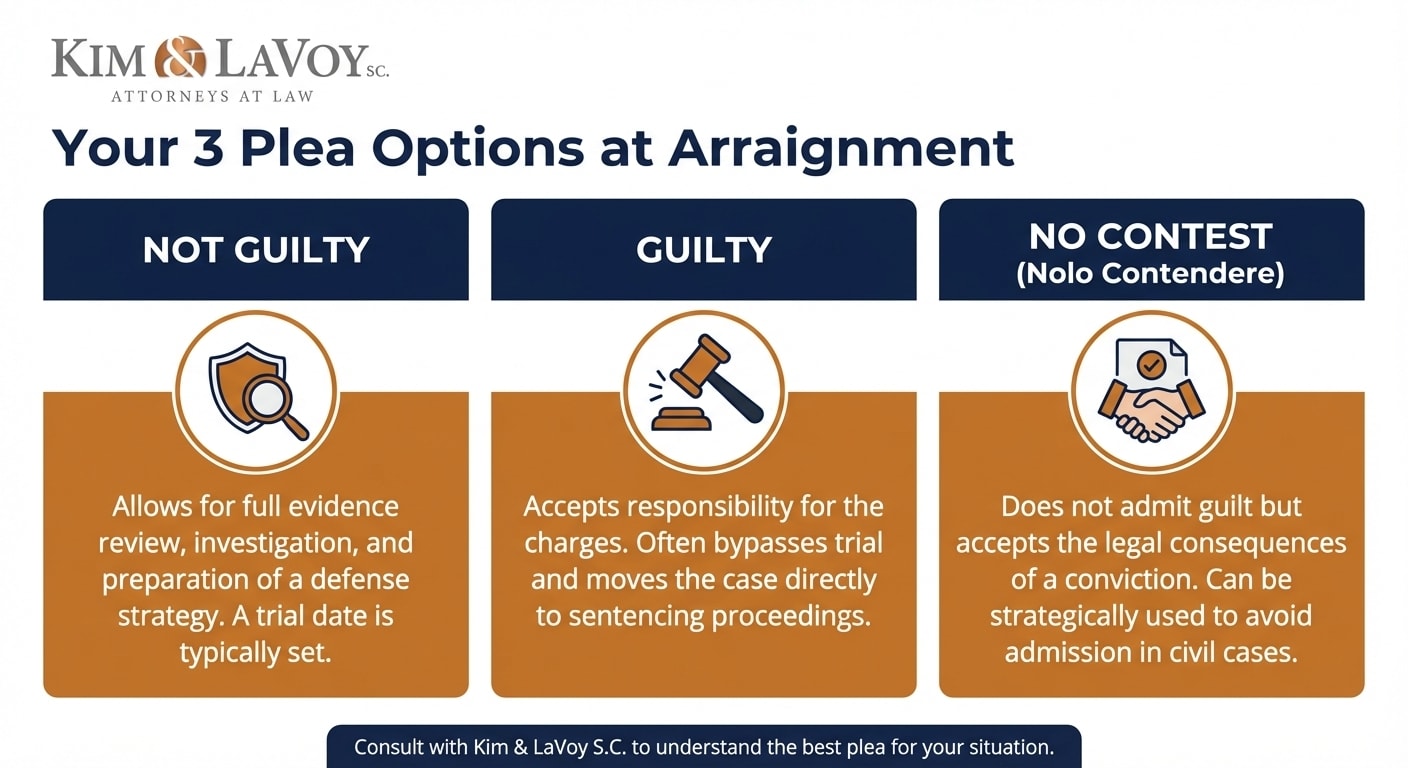
An arraignment is one of the first formal steps in your criminal case in the court system. During arraignment, the court reads the charges against you and asks you to enter a plea such as guilty, not guilty, or no contest. [Source]
This step is different from the first appearance. A first appearance usually focuses on custody, bail, and basic information. [Source] The arraignment procedure focuses on the charges themselves and how the case will move forward.
As Mr. Kim explains, “We want to be involved in things like the peas, bail decisions, the conditions of bail, to make sure that as the case progresses, because the case is going to take several months before it resolves, that it’s done so in a way that’s as least intrusive to the client’s life as possible.” Call us for your free consultation today at (414) 257-2100.
Key Arraignment Rules and Procedures
Once you understand what an arraignment is, the next question is usually what actually happens inside the courtroom. Knowing the process structure can make it feel less overwhelming.
Rule 1: Purpose
The purpose of an arraignment hearing is to inform the criminal defendant of the formal charges, confirm identity, and ensure constitutional rights are protected. This includes the right to counsel and the right to remain silent. [Source]
Rule 2: Timeframe
In Wisconsin, an arraignment often occurs after charges are filed and sometimes after a preliminary hearing. The exact timeline depends on the case, jurisdiction, and whether the defendant is in custody.
Rule 3: The Plea
At arraignment, the defendant enters a plea. Many people enter a not guilty plea so their attorney can review evidence, prepare a defense, and explore plea bargaining. If a defendant refuses to enter a plea, the judge will typically enter a not guilty plea on their behalf.
Rule 4: Bail and Release
The judge considers many factors when deciding bail, including criminal history, flight risk, and community safety. Some defendants are released on their own recognizance, while others have bond conditions set.
Rule 5: Appearance Waiver
In some situations, the defense counsel may waive the defendant’s appearance, allowing the attorney to handle parts of the arraignment process on their behalf.
Rule 6: Rights Advisory
The court must explain constitutional rights, including the right to a jury trial, the right to counsel, and the right to remain silent.
What Happens at an Arraignment Hearing for a Felony?
When charges are more serious, the arraignment carries more weight. The process itself is similar, but the potential consequences make preparation even more important.
Wisconsin Felony arraignment hearings carry higher stakes due to the potential jail time and long-term consequences.
Wisconsin felony arraignment hearings involve informing the defendant of the indictment, entering a plea, and moving the case toward trial. Bail decisions are especially important because they affect whether a defendant remains in custody.
After the arraignment, the defense may challenge evidence, negotiate plea agreements, and begin preparing for trial. Some felony cases resolve before trial, while others proceed to a jury decision.
Call Kim & LaVoy S.C. at (414) 257-2100 for a free consultation.
Do I Need a Lawyer at the Arraignment Hearing?
At this point, many people start asking the same question. Should I handle this on my own, or do I need guidance before I walk into court?
While you can appear without a lawyer, an arraignment is a vital stage where early decisions can affect the entire criminal case. A Wisconsin criminal defense lawyer will help explain the consequences of each plea, ensure the defendant’s rights are protected, address bail, and begin reviewing evidence.
Mr. Kim often reminds clients, “Arraignment may feel brief, but it shapes what happens next. Having guidance early gives people clarity instead of uncertainty.”
What Are My Next Steps After Arraignment?
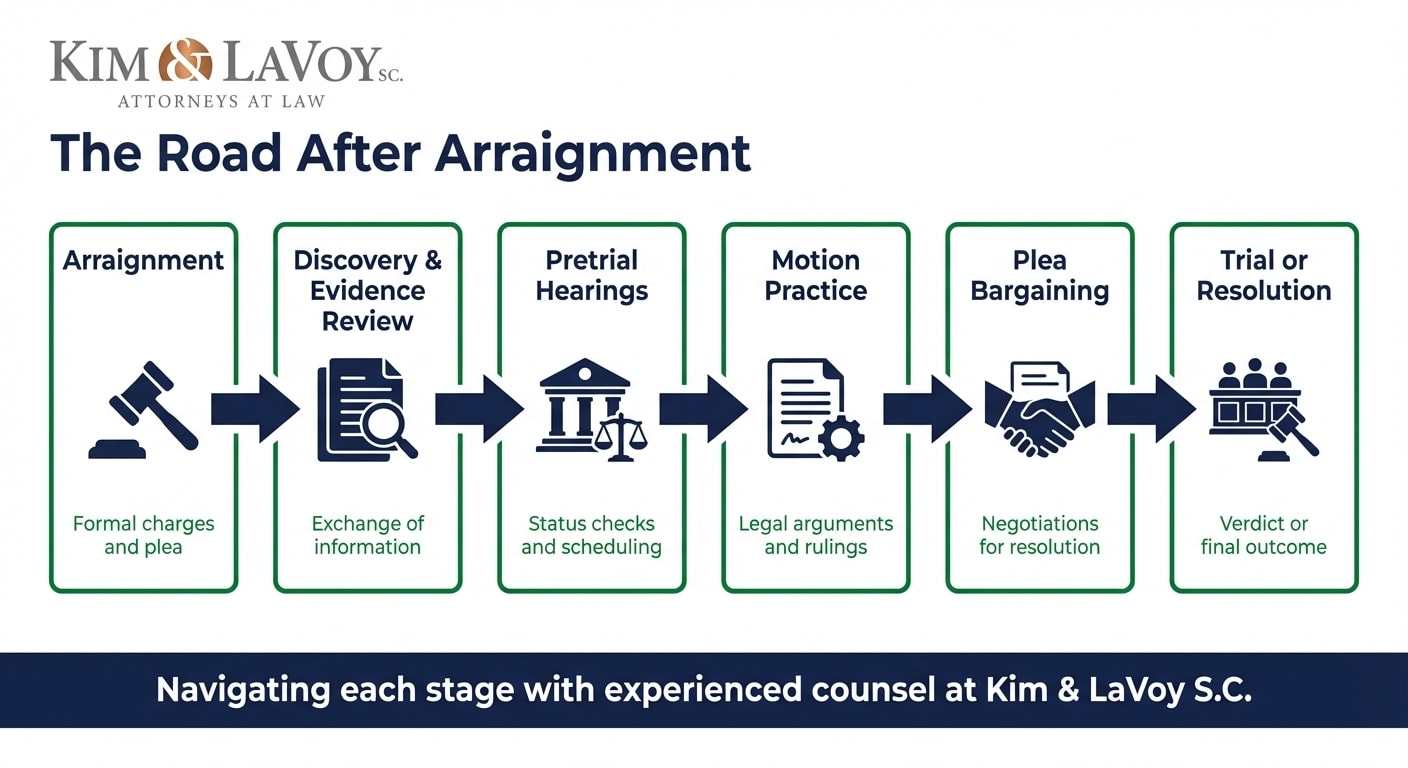
Arraignment is not the end of the process. In many ways, it is the beginning of the strategy phase where decisions become more intentional.
After the arraignment hearing, the case moves into preparation. This phase can include discovery, reviewing evidence, filing motions, and exploring plea agreements.
- Future steps often include:
- Pretrial hearings
- Motion practice
- Plea bargaining discussions
- Trial preparation
- Scheduling the next court date
In felony cases, this stage can last months while the defense evaluates the prosecution’s case and looks for weaknesses.
How Kim & LaVoy Can Help You With Your Arraignment in Wisconsin

This is where having the right support can make a meaningful difference. The early stages of a case often shape everything that follows. “People often focus on the immediate fear of what just happened. We focus on the bigger picture so you understand where the case may go and what options are still available, ” says Mr. Kim.
An arraignment hearing may be brief, but it is a critical stage in the judicial process. Working with an experienced attorney before your arraignment helps you understand what to expect, what each plea means, and how to protect your rights from the beginning.
At Kim & LaVoy S.C., preparation often starts before the hearing. This includes explaining charges, reviewing early evidence, addressing bail concerns, and beginning a strategy that carries through the rest of the case.
As Mr. Kim explains, “Our role is not just to stand next to someone in court. It is to make sure they understand their options and feel supported before decisions are made.”
Conclusion
If you take one thing from this, it is that arraignment is about clarity, not judgment. Understanding arraignment rules in Wisconsin gives you confidence during one of the most important early stages of a criminal case. The arraignment hearing is where formal charges are presented, a plea is entered, and the court sets the path forward. Whether your case involves a misdemeanor or felony, this stage influences bail, defense strategy, and future court dates.
If you or a loved one is preparing for an arraignment hearing, getting legal guidance early can make a meaningful difference. Call Kim & LaVoy S.C. at (414) 257-2100 for a free consultation and clear answers about your next steps.
Frequently Asked Questions About Understanding Arraignment Rules
When should a defendant enter a not guilty plea instead of a guilty plea?
Many defendants enter a not-guilty plea so their attorney can review the evidence before any decision is made. This allows the case to move through the district court or superior court process in open court before anyone is found guilty or convicted.
What happens after my first appearance, and how does it affect my next court date?
After the first appearance, the case moves toward arraignment and future hearings where a court date is scheduled. The district court handles the early proceedings, and depending on the outcome, the case may proceed to trial or be resolved in the courtroom.
How does plea bargaining or a plea agreement work in a felony case?
Plea bargaining allows the defense and prosecution to resolve a felony case without trial through a plea agreement, with the defendant pleading guilty. These discussions take place within the court system and may affect how a sentencing judge later decides penalties if someone is convicted.
What happens when a defendant enters a plea in district court or common pleas proceedings?
When a defendant enters a plea, it becomes part of the official record in open court. Depending on the plea, the case may continue toward trial, resolution, or potential sentencing if someone is later found guilty or convicted.
What is the difference between being represented by a public defender and hiring a private criminal defense attorney?
Both public defenders and private defense attorneys are licensed lawyers whose job is to protect a defendant’s rights and build a defense. The biggest differences usually come down to caseload, availability, and the amount of individualized attention your case receives. A public defender is appointed by the court if you cannot afford a lawyer. Public defenders are experienced and work inside the court system every day, but they often manage a very high number of cases at once. A private criminal defense attorney, like the attorneys at Kim & LaVoy S.C., is hired directly by you. This typically allows more time to review evidence, prepare for hearings such as an arraignment, develop a defense strategy, and communicate about your case.
Can charges change after arraignment?
Yes, charges can change as new evidence is reviewed or negotiations occur in the court system. If a defendant waives certain rights or later accepts a plea, the case may move toward conviction, sentencing, or appeal, depending on the outcome.
What defendant’s rights should I be aware of before being arraigned?
Defendants’ rights include the right to counsel, the right to remain silent, and the ability to challenge the crimes charged by the district attorney. These rights allow you and your lawyer to cross-examine witnesses, question the prosecutor’s evidence, and ensure that any case must be proven beyond a reasonable doubt under the law.
Legal Disclaimer
The information provided in this article is for general informational purposes only and does not constitute legal advice. Every criminal case is unique, and the facts of your specific situation may result in different outcomes than those described here. Reading this content does not create an attorney-client relationship between you and Kim & LaVoy S.C. or any of its attorneys. Wisconsin law is complex and subject to change. For legal advice tailored to your individual circumstances, please contact Kim & LaVoy S.C. directly to schedule a consultation.