
Just as the term suggests, a pretrial status conference takes place before the trial. Many people arrive at a pretrial status conference feeling anxious, confused, or unsure about what any of it means for their future. But there’s no need to worry. If you’re hired the right Wisconsin criminal defense attorney, then this meeting could have a dramatic impact on the outcome of your trial. This is where good attorneys get their work done.
This meeting gives both the defense and prosecuting attorneys and the judge a chance to step back, look at where the case stands, and talk through the next steps, whether that involves negotiation, additional motions, or preparing for trial. Understanding what to expect at a pretrial status conference in Wisconsin can bring a sense of clarity during a time that often feels uncertain.
If you have been accused of a criminal act in Wisconsin, our team at Kim & LaVoy S.C. will walk alongside you, helping you understand the process, your options, and what each decision could mean. Call us for your free consultation today at (414) 257-2100.
Key Takeaways
- A status conference is a check on case progress, deadlines, and scheduling at any point during litigation.
- At a pretrial conference, the parties and judge actively work through trial logistics, evidence, motions, and potential settlement or plea agreements. This is done at a hearing closer to the trial date but before the trial begins. [Source]
- Both conference types exist in Wisconsin civil and criminal courts, but the pretrial conference is the more consequential of the two, often shaping or even resolving the case before it ever reaches a courtroom.
What Is a Pretrial Status Conference?
At this point in a criminal case, many people are still trying to make sense of what is happening around them. A pretrial status conference exists to bring structure to this uncertainty and helps everyone understand where their case stands.
A pretrial status conference is a routine court meeting used to check the progress of a criminal case. The judge and attorneys talk about what has already happened, what still needs attention, and whether the case might be resolved without a trial. [Source]
You might hear this called a status hearing or pretrial conference. While the names can differ, the goal is the same. The Wisconsin courts want to keep the case moving and make sure nothing is slowing the process down.
These meetings can happen more than once. In misdemeanor cases, a pretrial status conference is often one of the final steps before trial. In felony matters, it may be one of several checkpoints along the way.
Julius Kim, Managing Partner at Kim & LaVoy S.C., explains, “A status conference is often where things start to become clearer. Both sides begin to understand the risks, the strengths, and what a realistic path forward may look like.”
Key Activities at a Pretrial Status Hearing in Wisconsin
So, what should you expect, and has your attorney prepped you for this conference? If not, it can feel frustrating when progress seems slow or unclear. These meetings are where much of the behind-the-scenes work happens to move your case forward.
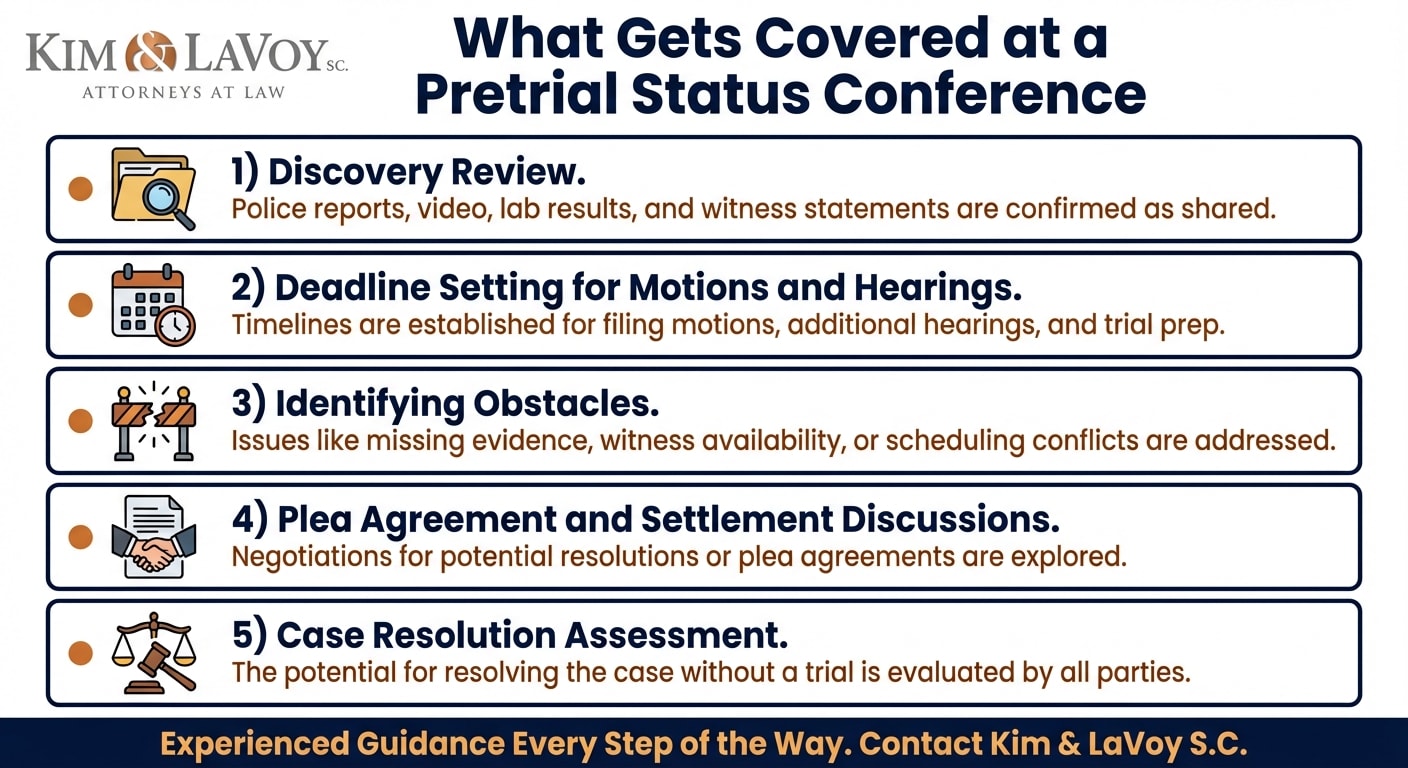
A pretrial status conference focuses on the practical side of the case rather than arguments about guilt. It is really about the admin associated with the case, which includes:
- The court reviews whether discovery has been shared. This can include police reports, video, lab results, witness statements, and other evidence.
- The judge may set or adjust deadlines for motions, additional hearings, or trial preparation. Setting timelines helps prevent unnecessary delays.
- Attorneys may talk about obstacles such as missing evidence, witness availability, or scheduling conflicts.
- These conversations help identify what still needs to happen before the case can move forward.
- This stage often includes settlement discussions or plea agreement conversations.
Pre-trial Conference Preparation and Attendance in Wisconsin
Waiting at the courthouse while your attorney speaks with the prosecutor can feel uncomfortable and even isolating. Understanding why this process works the way it does can make that experience feel more manageable.
In reality, this process actually protects you. These private conversations allow honest negotiation without statements being used against you later.
Preparation may include reviewing evidence, gathering documents, and talking through possible outcomes with your attorney.
Mr. Kim often tells clients, “These meetings are about getting an understanding of what the prosecution’s standings are. With this information, we can sort of game plan and prepare what we think might ultimately happen in the case.” Call us for your free consultation today at (414) 257-2100.
What Is the Difference Between a Pretrial Conference and a Status Conference in Wisconsin?
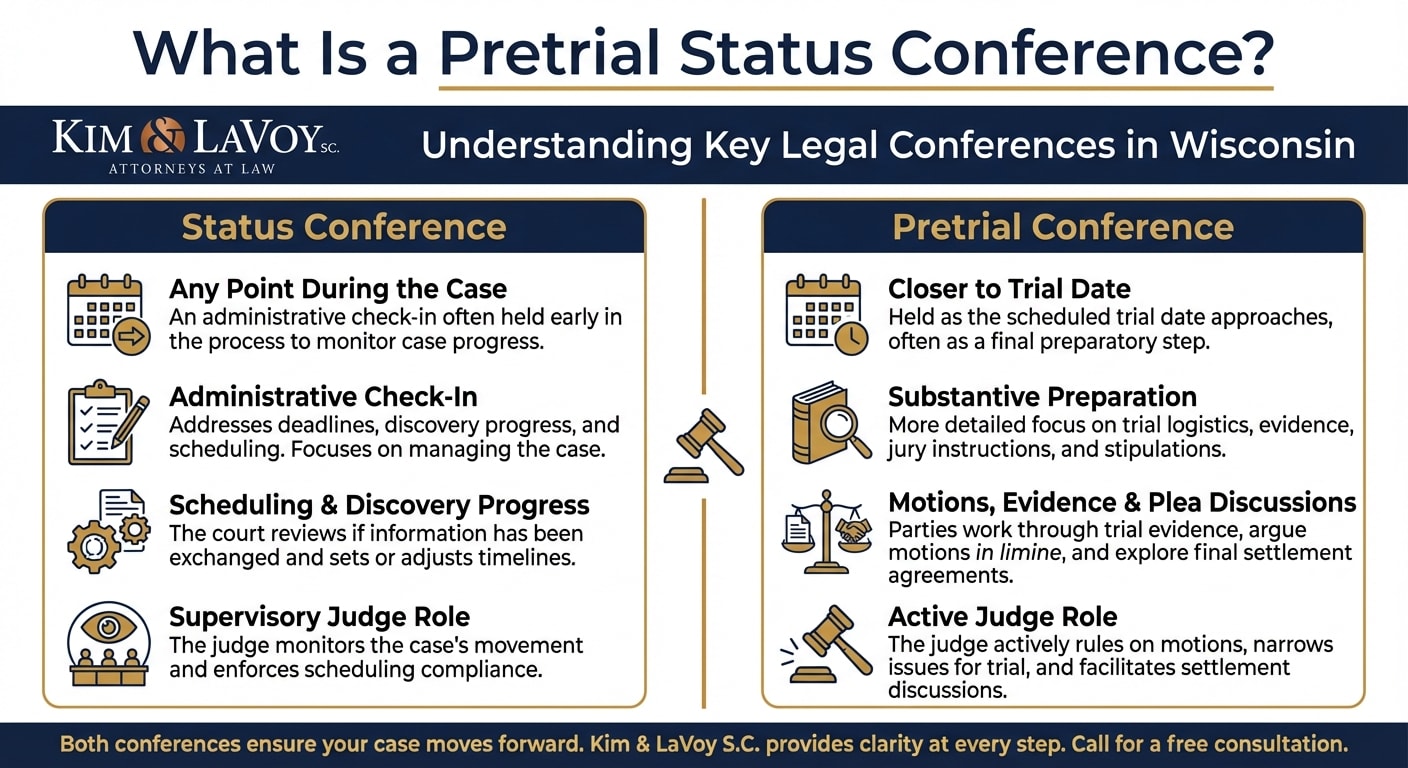
Legal terminology can make different hearings sound more complicated than they really are. In reality, these conferences serve similar purposes and are simply different points along the same path.
| Feature | Pretrial Conference | Status Conference |
|---|---|---|
| Purpose | Prepare the case for trial — resolve outstanding issues, discuss evidence, finalize witness lists, and explore settlement | Check in on the progress of a case and ensure it is moving forward on schedule |
| Timing | Held closer to the scheduled trial date | Can be held at any point during the case, often earlier in the process |
| Who Attends | Judge, attorneys, and often the parties themselves | Judge and attorneys (parties may or may not be required) |
| Scope | More substantive — covers trial logistics, motions in limine, jury instructions, stipulations, and potential plea or settlement discussions | More administrative — addresses deadlines, discovery progress, scheduling, and any procedural delays. A Wisconsin court may ask whether discovery is complete, whether motions have been filed, and whether the parties believe a resolution is possible. [Source] |
| Outcome | May result in a pretrial order, agreed stipulations, or a resolved case (plea/settlement) | May result in updated scheduling orders or new deadlines |
| Formal Authority (Wisconsin) | Governed by Wis. Stat. § 971.23 (criminal) and Wis. Stat. § 802.10 (civil) |
Authorized under Wis. Stat. § 802.10 and general court scheduling authority |
| Common in | Both criminal and civil cases, typically as trial approaches | Both criminal and civil cases throughout the litigation process |
| Judge’s Role | Active — may rule on motions, facilitate settlement, narrow issues for trial | Supervisory — monitors case progress and enforces scheduling compliance |
Courts occasionally use the terms interchangeably because both hearings focus on managing pre-trial matters rather than deciding guilt. In either setting, the goal is to keep the case moving forward, clarify positions, and determine whether a settlement agreement or plea agreement may be reached under certain terms. Discussions can include whether a person might plead guilty, contest the charges, or continue preparing for trial.
Neither hearing involves witnesses, testimony, or presenting full evidence. These meetings generally consist of scheduling, negotiation strategy, and identifying obstacles such as missing information, victim availability, or additional investigation needs. These are practical steps within the law that help the criminal justice system operate efficiently.
In many cases, this is also when attorneys provide their opinion about strengths and risks in the case. This guidance helps a person understand their options before deciding whether to accept settlement offers, continue negotiations, or proceed to trial.
“Our job is not to just get people from point A to point B, we’re also making sure they understand what’s happening and what comes next,” says Mr. Kim. Call us for your free consultation today at (414) 257-2100.
What Are the Next Steps After The Pretrial Status Conference?
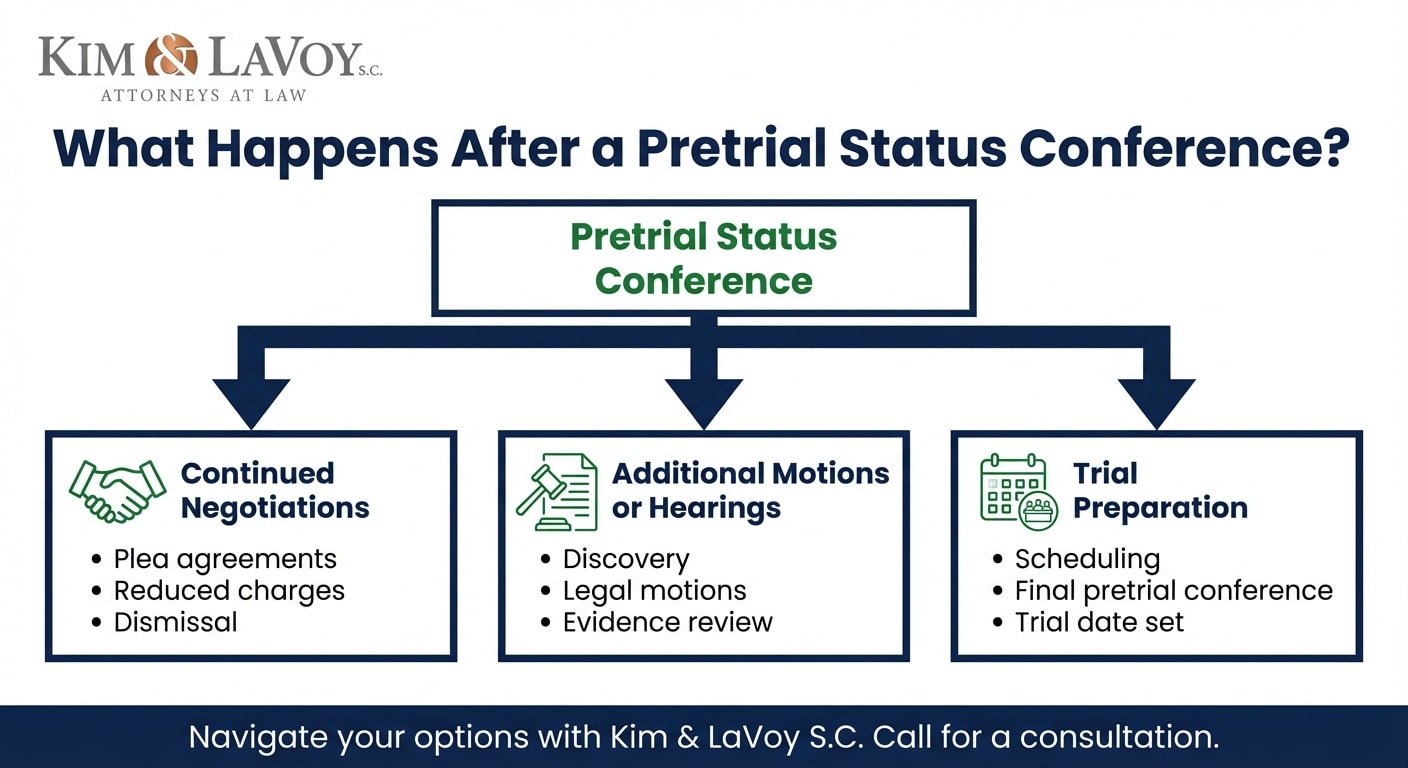
After a pretrial status conference, it is natural to wonder what happens next and how quickly things will move. While every case is different, this stage often brings more direction than answers. While every situation is different, most cases move in one of three directions.
Continued negotiations
- If the parties are making progress toward resolution, negotiations may continue.
- Attorneys may review settlement offers, discuss whether a plea agreement is appropriate, and evaluate whether certain terms could lead to reduced criminal charges, a dismissal, or alternative sentencing.
- In some situations, a person may decide to plead guilty after reviewing the evidence and understanding the possible sentence.
- In others, negotiations continue as more information becomes available.
Additional motions or hearings
- If the case is not ready for resolution, additional pre-trial matters may be scheduled.
- This can include filing motions, completing discovery, or addressing legal issues that depend on evidence or witness availability.
- These steps often involve exchanging evidence, reviewing reports, and preparing arguments that may affect whether charges are dismissed or proceed to trial.
Trial preparation
- The court will also focus on setting timelines.
- A future court date may be scheduled for another status hearing, a final pretrial conference, or the trial itself.
- These scheduling decisions help the two sides stay organized and ensure the case does not stall within the criminal justice system.
Occasionally, a case may resolve quickly after a status hearing if both sides reach an agreement. Other times, progress happens gradually as attorneys gather information, consult victims, and evaluate the strength of the evidence. Each decision depends on the facts, the law, and the criminal charges at hand.
Why Having a Criminal Defense Attorney Matters and How Kim & LaVoy S.C. Can Help
Many people assume these meetings are procedural and do not require much strategy. In truth, these early conversations and decisions often shape the entire direction of a case.
Having an experienced criminal defense attorney means you do not have to interpret those conversations on your own. You have someone who understands the court system and can explain what each development means for your future.
As Mr. Kim explains, “Our role is to walk alongside people during difficult moments. When clients understand the process, they feel less overwhelmed and more confident about the path ahead.”
At Kim & LaVoy S.C, preparation begins well before the pretrial status hearing in Wisconsin. This includes reviewing the prosecution’s evidence, identifying risks, preparing a negotiation strategy, and making sure you understand your options before decisions are made.
Early guidance can prevent rushed decisions and open opportunities that may not be obvious without experienced support. “The earlier we get involved, the more we can shape what happens. By the time a pretrial status conference arrives, we want to already understand the case deeply, not be catching up.”
Conclusion
A pretrial status conference is a routine step in Wisconsin, but it carries real importance. It allows the court and attorneys to review progress, address concerns, and explore whether the case can be resolved without trial. While it may feel procedural, this stage often shapes negotiation strategy, timelines, and the path forward. Understanding what to expect at a pretrial status conference can help you feel more steady during an uncertain time. Facing court dates alone can make an already stressful situation feel heavier. Having guidance means you do not have to interpret each step by yourself.
If you have a pretrial status conference coming up and want clear guidance, Kim & LaVoy S.C. is here to help you understand your options and move forward with confidence. Contact our team today for your free consultation at (414) 257-2100.
Frequently Asked Questions About Pretrial Status Conferences in Wisconsin
What happens after a pretrial status conference if a trial date is set?
If a trial date is scheduled, it usually means the case is moving forward while attorneys continue preparing. Your lawyer will help you understand the plan, what preparation looks like, and how the prosecution’s case may be addressed.
What is the purpose of a pretrial status conference in a criminal case?
The purpose is to review progress, discuss evidence, and create a clear plan for the next steps. It allows the court to ensure both sides are prepared and that the case continues to move forward.
How does my attorney evaluate the prosecution’s case during this stage?
Your attorney carefully reviews reports, videos, witness statements, and other materials obtained through search and discovery. This evaluation helps shape the negotiation strategy and determine whether the case should be resolved or proceed to trial.
Do I need to prepare anything before a pretrial status conference occurs?
Preparation often includes gathering documents, discussing questions with your attorney, and understanding the education you need about the process. Having a clear plan can make the experience feel far less overwhelming.
Where can I learn more about what to expect at a pretrial status conference?
Your attorney can walk you through each step and explain what matters for your specific situation. You can also review resources on our website page dedicated to pretrial hearings and what typically happens next.
Legal Disclaimer
The information provided in this article is for general informational purposes only and does not constitute legal advice. Every criminal case is unique, and the facts of your specific situation may result in different outcomes than those described here. Reading this content does not create an attorney-client relationship between you and Kim & LaVoy S.C. or any of its attorneys. Wisconsin law is complex and subject to change. For legal advice tailored to your individual circumstances, please contact Kim & LaVoy S.C. directly to schedule a consultation.