
Wisconsin Self-Defense Laws Explained
If you are reading about Wisconsin self-defense law, then we can assume that you or a loved one has found themselves in need of legal defense. The most common question we hear is “What constitutes self-defense in Wisconsin?” and “How do Wisconsin self-defense laws protect our citizens?”
Maybe something frightening happened. Maybe you are trying to understand your rights before you ever need them. Or maybe you or someone you love is now facing questions from the police. First we ask that you take in everything we are about to discuss with as clear a mind as possible. We understand that this can feel overwhelming. But it doesn’t have to be.
Here is the truth. Self-defense law is not just about what you felt in that moment. It is about what the law allows, what the evidence shows, and whether the prosecutor believes you went too far. Even people who truly acted in self-defense can face criminal charges.
That is why these cases need careful handling. At Kim & LaVoy S.C., we want to make sure you have all the information you need to understand self-defense law in Wisconsin, including deadly force, the castle doctrine, and what happens when the state challenges such a claim.
At Kim & LaVoy, S.C., we understand that self-defense situations are deeply human. People act quickly out of fear. They try to protect their lives, their families, and their future. Our role is to make sure the law sees the full picture and that you are not judged unfairly in a Wisconsin court. Call our team today for a free consultation (414) 257-2100 on your self-defense case.
Contact us today for your free consultation and find out more about how we can help you navigate your case.
Key Takeaways
- Under Wisconsin law, you may use force if you reasonably believe it is necessary to stop an unlawful attack.
- Self-defense is an affirmative defense, meaning your attorney raises it and supports it with evidence.
- Deadly force is allowed only in limited situations involving imminent death or great bodily harm.
- Wisconsin’s Castle Doctrine can protect you after an unlawful and forcible entry into your home, car, or place of business, but it has limits.
- Self-defense situations can still lead to criminal law investigations and possible civil liability.
- Getting legal help early through a free consultation with our team can change the outcome of a case.
What Wisconsin’s Self-Defense Law Requires
The foundation of Wisconsin’s self-defense laws is the understanding that people have the right to protect themselves when they are truly in danger. [Source] Moments like these happen fast. You do not have time to think through every legal rule. You act because you are scared and trying to stay safe.
Because of that, the law focuses on what you believed in that moment and whether that belief was reasonable.
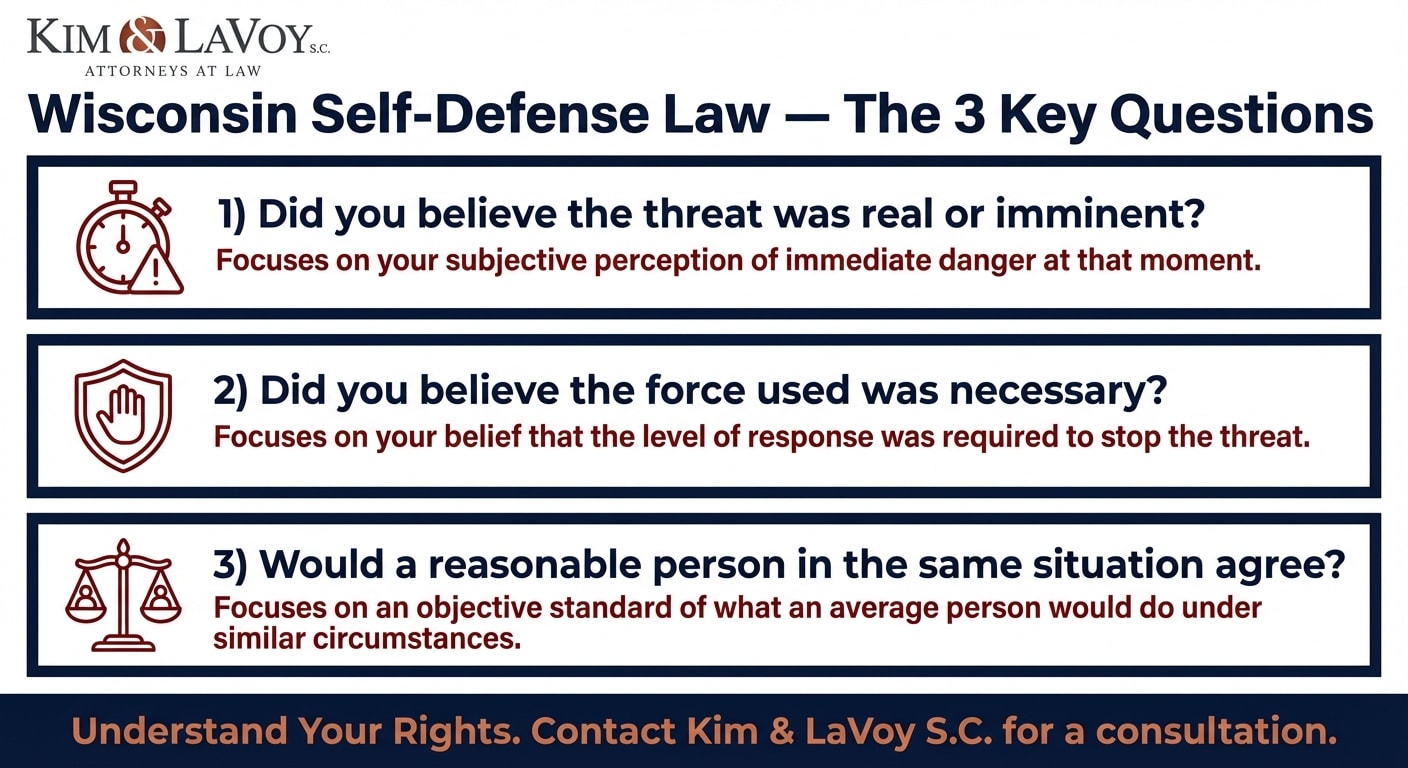
In simple terms, the law looks at three things:
- Did the person defending believe a threat was real or about to happen?
- Did they believe the amount of force used was necessary to stop that threat?
- Would a reasonable person in the same situation see it the same way?
The idea of reasonable belief sits at the center of almost every self-defense case. It is not about perfection. It is about whether your fear and your response made sense given what you were facing.
Evidence plays an important role. Video, witness statements, injuries, and timing help tell the story. Sometimes those details support the person defending. Sometimes they raise questions. That is why early legal guidance matters.
Mr. Kim often reminds clients,

“Most people who call us after a self-defense situation are not trying to avoid responsibility. They are trying to understand whether they did the right thing in a moment that felt terrifying. Our job is to slow everything down and make sure their story is truly heard.”
He also explains that legal language can feel cold compared to what people experienced, “The law talks about reasonableness, but real life is messy. Fear is messy. We help the court see the human moment behind the legal language.” Call our team today for a free consultation (414) 257-2100
When Does Self-Defense Become A Deadly Force Case?
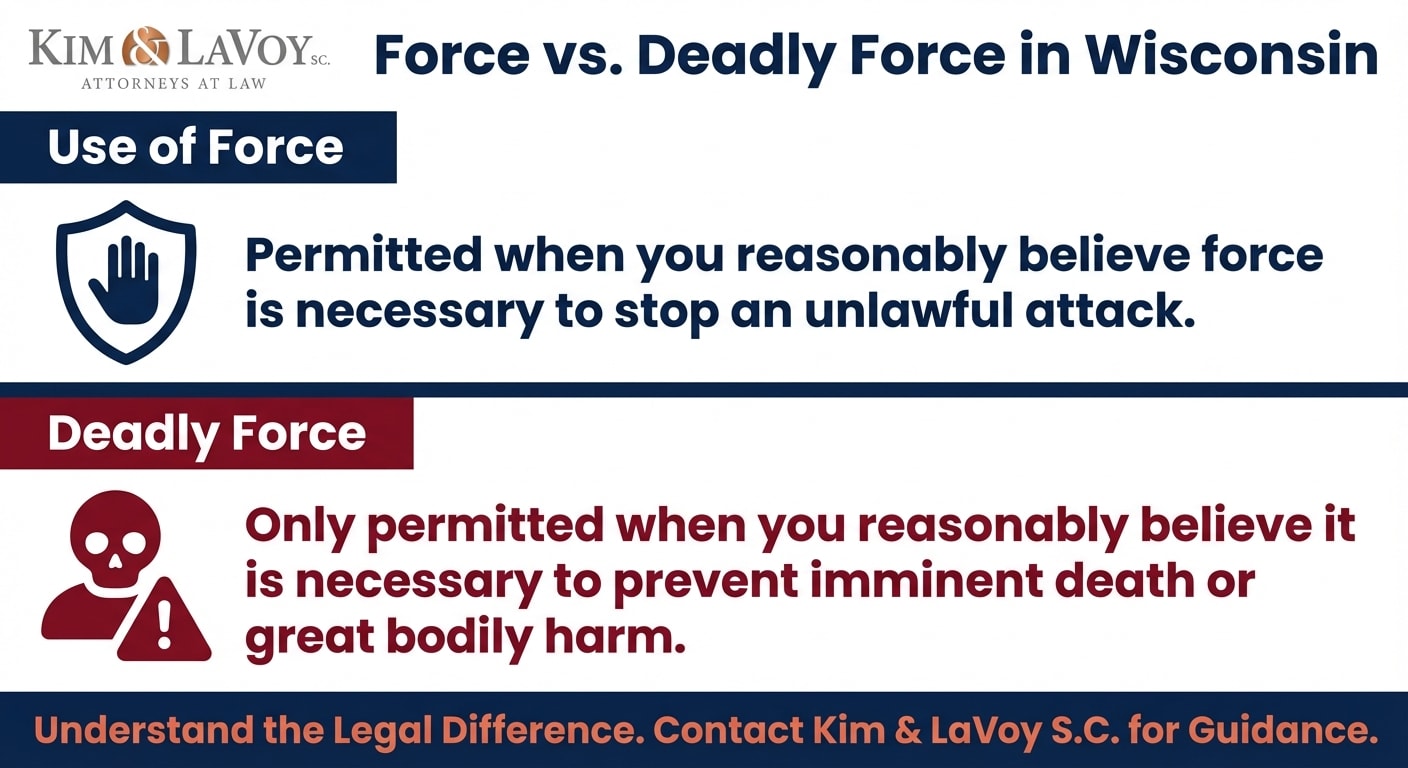
Not every self-defense situation is treated the same. The law draws a clear line between everyday force and deadly force or lethal force.
Under Wisconsin law, force likely to cause death or serious injury is only justified when someone reasonably believes it is necessary to prevent imminent death or great bodily harm. [Source]
In real life, that usually comes down to one question. Were you facing an imminent threat, and did it feel like there was no other safe way to protect yourself?
These moments are rarely calm or clear. They are fast, emotional, and overwhelming.
Mr. Kim explains it simply,
“When someone believes their life is in danger, they are not thinking like a lawyer. They are thinking about survival. That does not make them reckless. It makes them human.”
If the state believes the force went beyond what was necessary, you may still face criminal charges, even when you were terrified. That does not mean you were wrong. It means the situation needs to be explained with care and context.
“Deadly force cases are some of the most emotionally heavy situations we handle. What matters is helping the system understand why the person believed they had no other choice.”
Is Wisconsin a Stand Your Ground State?
Many people searching for self-defense law in Wisconsin want a simple yes or no answer about stand your ground. The reality is more nuanced.
Wisconsin focuses on necessity and reasonableness. Even when retreat is not legally required, a jury may still consider whether someone could have safely avoided the conflict when deciding if deadly force was necessary. [Source]
That does not mean you were expected to think through every option in a moment of fear. It means the law looks back afterward and tries to understand the situation.
Mr. Kim often explains this gently, “People often want a simple rule they can rely on, but self-defense rarely fits into simple boxes. Every case is about context, timing, and what the person understood in that moment.”
The key questions remain the same.
- Was there real danger?
- Was the belief reasonable?
- Was the response a reasonable way to stop the threat?
Wisconsin’s Castle Doctrine Explained
Wisconsin adopted changes in 2011 that are often called Wisconsin’s Castle Doctrine. [Source] The idea behind it is deeply human. Your home, your car, and your workplace are places where you expect safety.
When someone unlawfully and forcibly enters one of those spaces, the law may presume that your fear was reasonable and your response justified.
Mr. Kim puts it this way,
“Your home is where you expect to feel safe. When that safety is broken, the fear is immediate. The law recognizes that, but it still asks careful questions. That is where experienced guidance matters.”
When The Castle Doctrine Applies
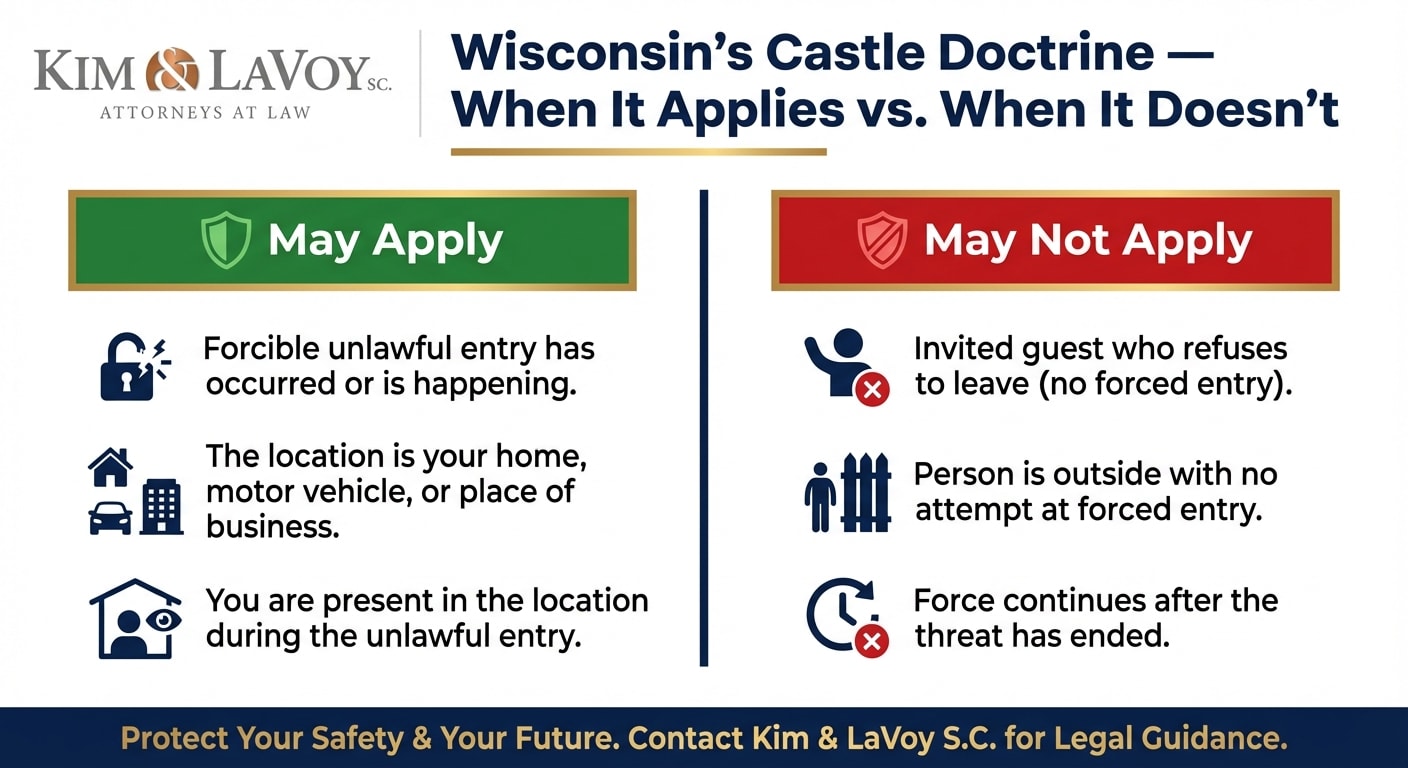
The Castle Doctrine can apply when:
- Someone is forcibly entering or has already entered through unlawful and forcible entry
- The location is your home, motor vehicle, or place of business
- You are present and reasonably believe the entry is happening
This is why people describe the rule as protecting your home, car, or business. As Mr. Kim explains, “The Castle Doctrine does not mean there are no questions. It means the starting point may be different. Our role is to protect that starting point and build from there.”
The Limits People Misunderstand
The Castle Doctrine is not unlimited. It does not apply to every uncomfortable situation.
For example, it may not apply when:
- An invited guest refuses to leave
- Someone is outside, but has not forced entry
- Force continues after the threat has ended
These details can feel small, but they matter. Self-defense cases often turn on timing, location, and what each person understood in that moment.
Perfect Self-Defense vs. Imperfect Self-Defense
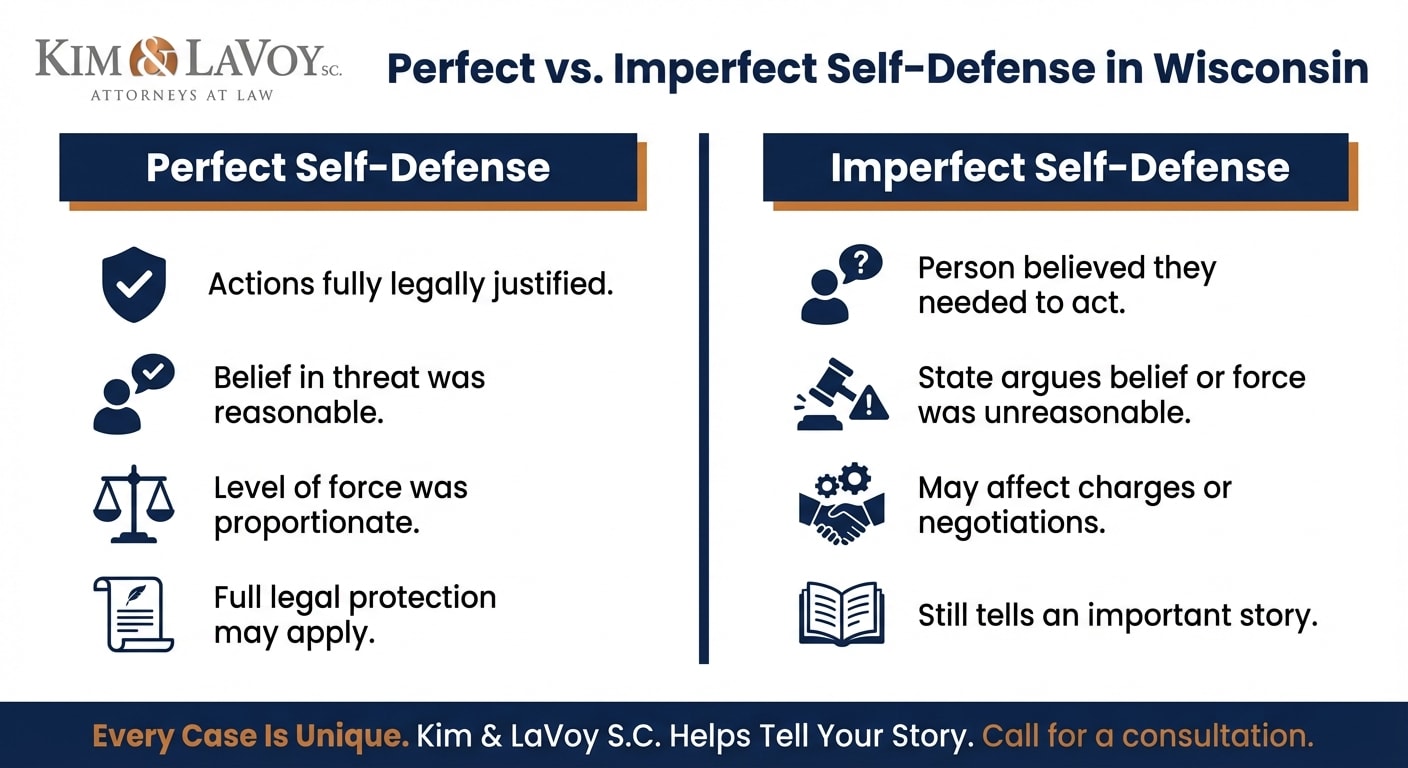
Wisconsin recognizes both perfect self-defense and imperfect self-defense. [Source]
Perfect self-defense generally means the actions were fully legally justified.
Imperfect self-defense means the person believed they needed to protect themselves, but the state argues that the belief or the level of force was unreasonable.
Mr. Kim often reassures clients that
“”Imperfect self-defense does not mean someone acted with bad intent. Often it reflects how fast these moments unfold and how difficult it is to measure fear in real time.””
This difference can affect how a case is charged, negotiated, or tried. “One of the most important things we do is help clients understand that a case is not defined by one label. There is always a bigger story.”
Call our team today for a free consultation (414) 257-2100
Provocation and Withdrawal
Another sensitive issue in self-defense cases is provocation. Prosecutors sometimes argue that the person defending played a role in starting the conflict. [Source]
The law may consider whether someone tried to step away, withdraw in good faith, or signal that they did not want the confrontation to continue.
Mr. Kim explains why these moments matter:
“Self-defense cases are rarely about one single moment. They are about everything that led up to it. That is why details matter and why early legal guidance can change the direction of a case.”
Small actions can shape how a jury understands intention.
Why Self-Defense Cases Still Lead to Criminal Charges
This is often the most painful part. Acting to protect yourself does not automatically stop an investigation.
Police and prosecutors must examine what happened, even when someone believed they were preventing imminent death.
They look closely at:
- Whether the danger was immediate
- Whether the force was necessary
- Whether the evidence supports the story
- Whether the response became excessive
That process can feel deeply unfair.
Mr.Kim says this often, “It is incredibly common for good people to feel shocked when they are investigated after defending themselves. Investigation does not equal guilt. It means the story still needs to be told.”
This is where support matters most. “You do not have to explain everything alone. Having the right team early allows you to protect your future while the facts are still being gathered.”
Conclusion
Self-defense cases are not just legal situations. They are life moments. Fear, uncertainty, and second-guessing are common. You may feel like everything changed in a matter of seconds. Julius centers clients with this reminder, “Our goal is not just to defend a case. It is to support a person through one of the most stressful moments of their life and make sure they are treated with fairness, dignity, and care.”
If you have questions about Wisconsin self-defense law or are worried about potential criminal charges, you do not have to navigate this alone. Contact Kim & LaVoy, S.C. for a free consultation to get clear, compassionate guidance and protect your future with a team that understands both the law and your story.
Frequently Asked Questions About Self-Defense Law in Wisconsin
How does Wisconsin law define imminent danger in a self-defense situation?
Under Wisconsin law, imminent danger means a threat that appears immediate and serious, not something that might happen later. Courts look at whether the defendant’s belief about the risk was reasonable and whether such force was used to stop unlawful interference with or her person or protect such other person. The focus is on the moment. Did the person feel they needed to act to avoid death or stop serious harm from their assailant? Evidence helps determine whether the person accused was acting within a legal right or whether prosecutors believe the situation involved criminal activity.
What does a Wisconsin court look for when reviewing a self-defense claim?
A Wisconsin court looks closely at timing, evidence, and whether the response matched the threat. Judges and juries examine whether the force intended was necessary, what the actor knew, and whether the actor intentionally escalated the situation. They also consider whether the person was acting lawfully, whether reasonable means were available, and whether the facts create reasonable doubt about criminal responsibility. In some specific circumstances, the court evaluates whether a subdivision applies to self-defense protections, including situations involving violent crime or the use of deadly force.
How does the castle doctrine apply when someone enters a person’s home?
The castle doctrine may apply when a person enters and unlawfully interferes with the actor’s dwelling or the actor’s person. The law considers whether the actor believed force was necessary, whether the actor knew the entry was unlawful, and whether the response was reasonable in those specific circumstances. However, the analysis changes if the person entering was performing official duties or if other facts suggest the entry was not forced. The distinction between protecting a dwelling and escalating force after the threat ends is often central to how a case is evaluated.
What happens if someone started the conflict but later tried to withdraw?
Wisconsin law recognizes that situations can change quickly. If someone in good faith withdraws from a confrontation and provides adequate notice thereof or clear adequate notice to her assailant, self-defense may still be considered depending on the facts. Courts may examine whether the person later faced imminent danger, whether they used reasonable means to step away, and whether the response was still necessary. These details can affect whether a case is viewed as self-defense, escalation, or a potential first-degree charge in serious situations.
Why should someone seek a free consultation after a self-defense incident?
A free consultation with our team will give the person accused a chance to understand how the law applies before making statements that could affect the case. Self-defense situations often involve complex questions about the law of the land, criminal activity, and whether deadly force was justified in certain circumstances. Early guidance helps preserve evidence, clarify what happened inside the actor’s dweactor’sr other location, and ensure the person is protected while the facts are reviewed. When someone is dealing with a potential violent crime investigation, having support early can make a meaningful difference in how the situation unfolds.
Legal Disclaimer
The information provided in this article is for general informational purposes only and does not constitute legal advice. Every criminal case is unique, and the facts of your specific situation may result in different outcomes than those described here. Reading this content does not create an attorney-client relationship between you and Kim & LaVoy S.C. or any of its attorneys. Wisconsin law is complex and subject to change. For legal advice tailored to your individual circumstances, please contact Kim & LaVoy S.C. directly to schedule a consultation.