
What Is a Plea Hearing in Wisconsin?
A plea hearing in Wisconsin is the court date where you tell the judge how you plan to answer the charges against you: guilty, not guilty, or no contest. When your plea date arrives, your case has reached a real decision point. The judge needs to hear your answer directly, in your own words, before your case can move forward.
Every plea carries different consequences, and once the judge accepts a plea, it becomes difficult to take back. That is why so many people search for information at this stage, trying to understand what actually happens before they walk into the courtroom. This page walks through what to expect, what the judge is required to confirm, and where your case goes next.

For the full picture of how a Wisconsin criminal case unfolds from arrest to resolution, see our overview of the Wisconsin criminal court process.
At Kim & LaVoy S.C., we prepare clients for this hearing by reviewing the charges, the evidence, and the options on the table before the court date arrives. Julius Kim spent years as a Milwaukee County prosecutor before founding this firm, and he evaluates plea offers the same way the other side does.
You don’t have to decide how to plead on your own. Contact us before your hearing so we can walk through your specific charges and options together.
Key Takeaways
- Wisconsin recognizes four types of pleas at a plea hearing: guilty, not guilty, no contest, and not guilty by reason of mental disease or defect.
- Before a judge can accept a guilty or no contest plea, Wisconsin law requires the judge to personally confirm you understand the charge and the maximum punishment you face.
- The judge must also find a factual basis for your plea, meaning enough evidence exists to support the charge, before accepting it.
- A no-contest plea does not admit guilt, and it generally can’t be used against you in a later civil lawsuit over the same conduct.
- The judge isn’t bound to follow the sentencing recommendation in your plea agreement and can impose the maximum penalty allowed by law.
- United States Courts report that nationally, guilty pleas resolve close to 90% of federal criminal cases, which shows how central this hearing is to how criminal cases actually get resolved.
What Happens at a Plea Hearing
A plea hearing occurs before a judge with all parties present and follows the same basic process in every Wisconsin circuit court. The judge calls your case, confirms your identity, and asks how you plead to each charge in the criminal complaint. Your defense attorney stands beside you through the entire hearing.
A not guilty plea means the court sets a trial date, and your case moves toward a jury trial unless it resolves another way first. If plea negotiations continue after that, your case returns to court for a change of plea hearing, where you formally withdraw your not guilty plea and enter a new one.
If you plead guilty or no contest, the judge questions you directly in what’s called a plea colloquy before accepting your plea. Wisconsin law requires the judge to personally confirm that your plea is voluntary and that you understand the charge and the maximum punishment you face, per Wisconsin Statute § 971.08(1)(a).
By pleading guilty or no contest, Wisconsin’s official plea form, Wisconsin Circuit Court Plea Questionnaire, CR-227, confirms that you give up:
- Your right to a jury trial, where all 12 jurors would have to agree on your guilt.
- Your right to remain silent.
- Your right to confront and cross-examine the witnesses against you.
- Your right to subpoena witnesses to testify on your behalf.
- Your right to make the State prove you guilty beyond a reasonable doubt.

People don't know what they don't know. The only way that they can really figure out what options are available and how to make things the best they possibly can be is by talking to an attorney who knows what they're doing.
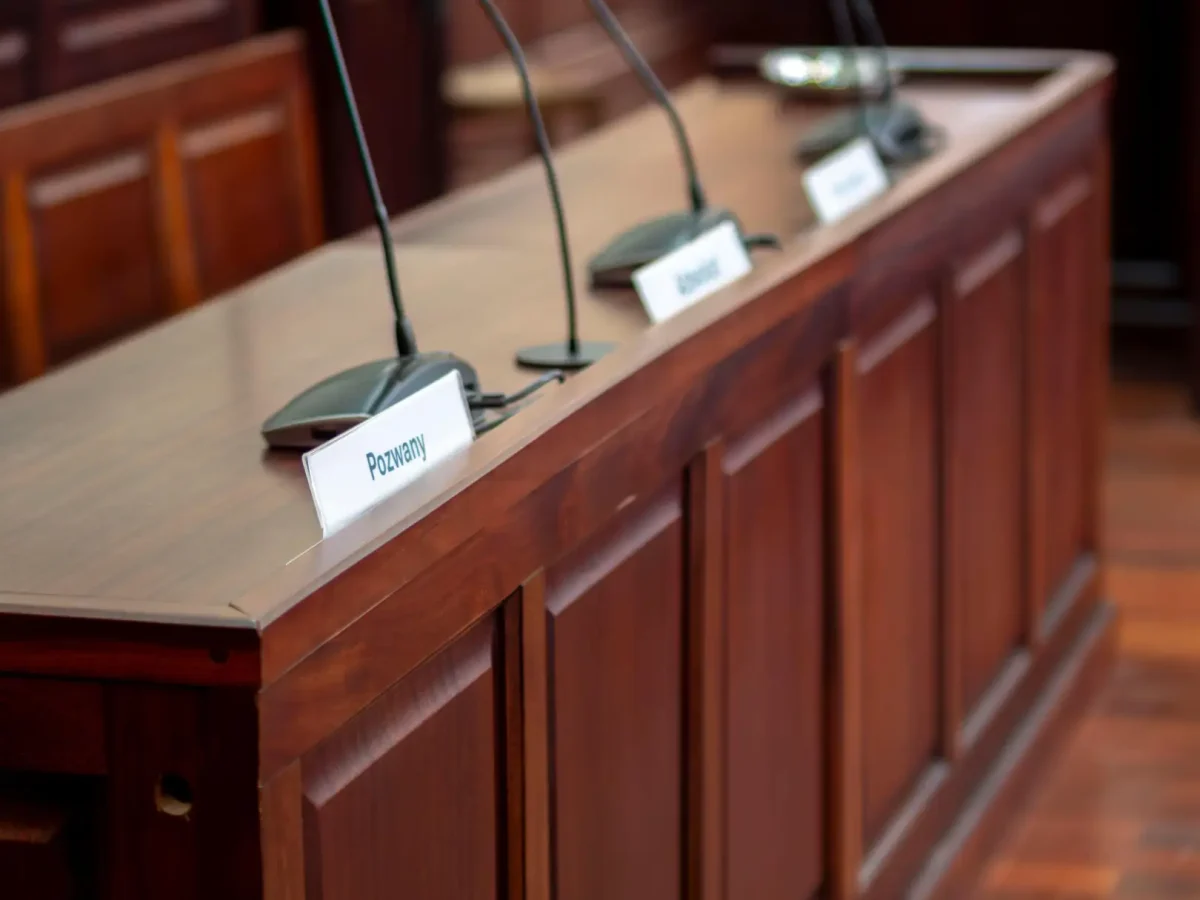
Knowing what a defense attorney does at this hearing explains why so few people go through a plea hearing without one. Because Julius Kim also trained officers at the police academy, he understands how the investigations behind these cases come together. That background shapes how we evaluate the strength of the evidence against you before you decide how to plead.
Guilty Plea, No Contest Plea, or Contest Plea: Understanding Your Options
United States Courts report that nationally, 90% of federal criminal cases are resolved through plea agreements. Wisconsin law recognizes four types of pleas at a plea hearing: guilty, not guilty, no contest, and not guilty by reason of mental disease or defect, per Wisconsin Statute § 971.06.
A plea of guilty admits you committed the offense and accepts the conviction and punishment.
A no contest plea, also called a nolo contendere plea, does not admit guilt, only that you accept the conviction and punishment. The judge treats it the same as a guilty plea for sentencing purposes. A no-contest plea generally can’t be used against you in a later civil lawsuit over the same conduct, per Wisconsin Statute § 904.10.
A not guilty plea means you require the State to prove its case beyond a reasonable doubt, and your case moves toward trial.
Wisconsin also recognizes an Alford plea where you accept a conviction but maintain your innocence, as long as a sufficient factual basis exists for each element of the crime. This doctrine traces back to a 1970 United States Supreme Court decision in North Carolina v. Alford, and Wisconsin courts have applied the same standard here. It usually comes up when the evidence against you is strong enough that going to trial carries a real risk, even if you dispute what happened.
In limited situations, Wisconsin law also allows a conditional plea, which lets you plead guilty or no contest while preserving your right to appeal a single pretrial ruling, most often a denied motion to suppress evidence. This option exists so you’re not forced to choose between accepting a plea deal and giving up a legal challenge that could still change your outcome.
There might be mitigating circumstances, and there could be ways that we could make the situation better that people don't realize.
How Plea Bargaining Works in a Felony or Misdemeanor Case
A plea agreement is a negotiated resolution and the result of plea bargaining between the prosecutor and your defense attorney. When that negotiation happens after you’ve already pleaded not guilty, your case returns to court for what’s called a change of plea hearing. In a felony case or a misdemeanor case, the terms can include a reduced charge, dismissed counts, or an agreed sentencing recommendation. Wisconsin law defines a felony as any crime punishable by imprisonment in a state prison, while every other crime is considered a misdemeanor, per Wisconsin Statute § 939.60.
The judge still reviews any plea agreement before accepting your plea and isn’t required to follow the sentencing recommendation both sides agreed to. Wisconsin’s official plea form, the Wisconsin Circuit Court Plea Questionnaire, CR-227, tells every defendant this directly before they sign it.
Better attorneys are able to get better deals. That's what it comes down to.
Kim & LaVoy S.C. focuses entirely on criminal defense, and that focus shapes how we approach every plea negotiation. Before agreeing to any plea deal, read through what to consider before pleading guilty, since the terms you accept at this hearing follow you well beyond the courtroom.
What the Judge Reviews Before Accepting Your Plea
Wisconsin law puts the responsibility for evaluating your plea on the judge, not just the prosecutor and defense attorney who negotiated it. Before the court accepts a guilty or no contest plea, the judge has to personally address you and confirm the plea is voluntary, per Wisconsin Statute § 971.08(1). The judge also has to confirm that there’s enough evidence to support the charge, a step known as a factual basis.
The Wisconsin Circuit Court Plea Questionnaire, CR-227, requires a judge to confirm the following before accepting your plea:
- No one has threatened or promised you anything outside the plea agreement.
- You understand the elements of the charge and the maximum penalty you face.
- There’s enough evidence to support a conviction.
- Any mandatory minimum sentence has been explained to you.
If the judge isn’t satisfied with any of these points, the plea is rejected, and your case proceeds toward trial. A rejected or withdrawn plea can’t be used against you later, per Wisconsin Statute § 971.08(3).
It's important that, as lawyers, we make sure that we are explaining to clients along the way, both the good side and bad side of their cases along the way. You need someone who's honest enough with you to do that.
What Happens After Your Plea Hearing
If the judge accepts your guilty or no contest plea at the plea date, your case moves toward a sentencing hearing, either right away or at a later date depending on the charge. By the time you reach your plea date, your case has typically already moved through a preliminary hearing and one or more status hearings.
Many felony cases in Wisconsin involve a pre-sentence investigation first, where a probation agent gathers information about you and your case for the judge to review. Read more about what a pre-sentence investigation involves, and see our full breakdown of what to expect at your sentencing hearing.
If your case does not resolve through a plea, it proceeds toward a jury trial, where the State has to prove every element of the charge beyond a reasonable doubt.
Kim & LaVoy S.C. serves clients throughout Milwaukee, Brookfield, Waukesha, Wauwatosa, West Bend, West Allis, and across Wisconsin. Wherever your case is filed, we give you an honest assessment of your situation rather than a rehearsed sales pitch, with no promises and no guarantees about how a court will rule.
A plea hearing can feel like the moment your case gets decided for you, but it does not have to feel that way. You get to walk into that hearing informed, prepared, and clear on what each option actually means for your future.
No ethical attorney can guarantee a certain result for a client. What I can guarantee is that we can get the best possible result under the circumstances.

Have questions about your case?
Speak with an experienced Wisconsin defense attorney
Call us at (414) 257-2100 or contact us before your plea hearing so we can talk through your charges and your options together.
What Happens Next?
Frequently Asked Questions About Plea Hearing
A plea hearing is the court date where you tell the judge whether you plead guilty, not guilty, or no contest to the charges against you. Wisconsin law requires the judge to confirm your plea is voluntary before accepting it, per Wisconsin Statute § 971.08(1)(a). If you plead not guilty, your case moves toward trial instead.
A plea of guilty admits you committed the offense, while a no contest plea does not. Both lead to the same conviction and sentence, but a no-contest plea generally can’t be used against you in a later civil lawsuit over the same conduct. [Wisconsin Jury Instruction Committee, SM-32A]
You aren’t required to accept a plea agreement. You can plead not guilty and let your attorney negotiate further, or take your case to a jury trial. Your defense attorney can help you weigh the risks of each path based on the evidence in your case.
Withdrawing a plea after the judge accepts it is possible in limited circumstances, but it becomes harder once sentencing happens. If the judge rejects your plea at the hearing itself, that plea can’t be used against you later, per Wisconsin Statute § 971.08(3).
Yes, in most cases, you have to appear in person for a plea hearing where you plead guilty or no contest, since Wisconsin law requires the judge to address you personally, per Wisconsin Statute § 971.08(1)(a). Your attorney can tell you what to expect for your plea date and specific court appearance.
A plea hearing itself usually takes a matter of minutes once the paperwork and questioning are complete, though the wait before your case is called can vary by courtroom. The real-time investment happens beforehand, in reviewing your charges and options with your attorney.
If the judge isn’t satisfied that your plea is voluntary or that enough evidence supports the charge, the judge rejects it, and your case proceeds toward trial. Call Kim & LaVoy S.C. at (414) 257-2100 before your plea hearing so we can help you understand what is actually being asked of you at this stage of the Wisconsin plea hearing process.
Legal Disclaimer
The information provided in this article is for general informational purposes only and does not constitute legal advice. Every criminal case is unique, and the facts of your specific situation may result in different outcomes than those described here. Reading this content does not create an attorney-client relationship between you and Kim & LaVoy S.C. or any of its attorneys. Wisconsin law is complex and subject to change. For legal advice tailored to your individual circumstances, please contact Kim & LaVoy S.C. directly to schedule a consultation.