
Wisconsin Felony Classes: Sentencing & Penalties Explained

Wisconsin felony classes determine the maximum prison sentence, fine, and length of supervision a judge can order after a conviction. Felony classes range from Class A, the most serious (life imprisonment), to Class I, the least serious (up to 3.5 years). If a prosecutor just told you, or someone you love, that a charge carries felony status, that single letter between A and I matters more than almost anything else in the case. Most people never expect to sit across from a judge.
If you are facing charges for a fourth OWI, a fight involving a knife, or a repeat drug possession charge, these can carry a felony classification under Wisconsin law. The fear that follows this realization is real, but you can be scared and still make clear decisions about what happens next.
Julius Kim, Managing Partner at Kim & LaVoy S.C., spent years as a Milwaukee County Assistant District Attorney before building defense cases. That background shapes how he reads a felony charge. He knows how prosecutors decide what class to file. Schedule a case evaluation with his team to find out where you stand.
Key Takeaways
- Wisconsin divides felonies into nine classes, A through I, under Wisconsin Statute § 939.50.
- A Class A felony carries a mandatory life sentence. A Class I felony carries a maximum of three and a half years in prison and a $10,000 fine.
- Wisconsin uses a bifurcated sentence for most felonies: time in state prison followed by extended supervision under Wisconsin Statute § 973.01.
- Some felonies fall outside the nine-class system as unclassified felonies, with penalties written into the statute that defines the crime.
- A felony conviction can bar firearm possession under Wisconsin Statute § 941.29 and suspends voting rights until the full sentence, including supervision, ends.
- Prior convictions can raise a felony’s maximum penalty through penalty enhancers under Wisconsin Statute § 939.62.
How Wisconsin Felony Classes Work
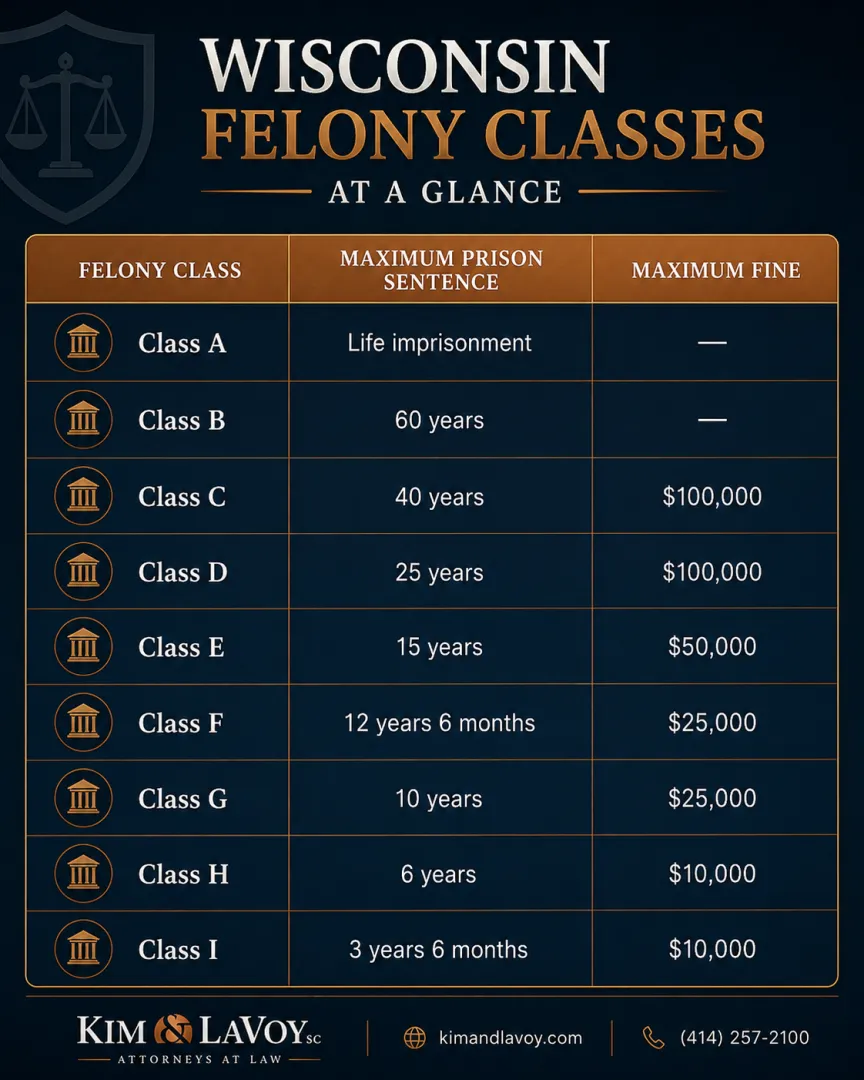
Wisconsin Statute § 939.50 sorts every felony into one of nine classes, Class A through Class I. The letter attached to a charge outlines the Wisconsin sentencing guidelines for felonies, including the maximum sentence and fine a judge can impose:
- Class A: life imprisonment
- Class B: up to 60 years in prison
- Class C: up to 40 years in prison and a $100,000 fine
- Class D: up to 25 years in prison and a $100,000 fine
- Class E: up to 15 years in prison and a $50,000 fine
- Class F: up to 12 years and six months in prison and a $25,000 fine
- Class G: up to 10 years in prison and a $25,000 fine
- Class H: up to six years in prison and a $10,000 fine
- Class I: up to three years and six months in prison and a $10,000 fine
Under Wisconsin Statute § 939.60, a crime punishable by imprisonment in the Wisconsin state prison system is a felony, and every other crime is a misdemeanor, which is covered on our felonies and misdemeanors practice page.

“The big surprise that people have is that, boy, in Wisconsin, a lot of times things that seem not so big of a deal are treated very seriously.”
You may have searched for a “Class U felony” while researching a case. Wisconsin Statute § 939.50 only defines nine classes, A through I. A charge without one of those letters is an unclassified felony, and its penalty is written into the statute that defines the crime.
How a Wisconsin Felony Sentence Is Structured
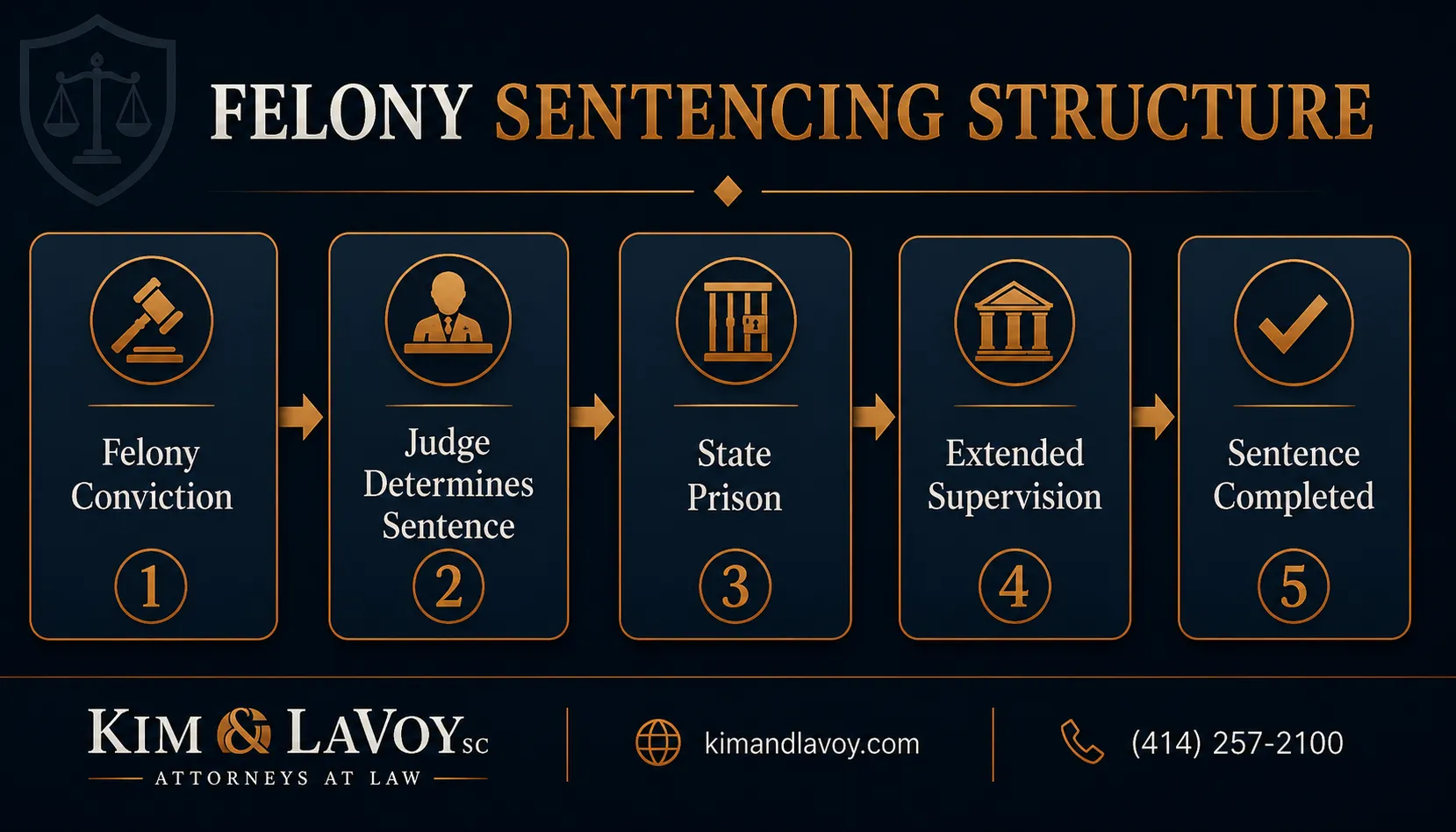
Once someone is convicted of a felony in Wisconsin, a judge doesn’t just pick a number. Wisconsin Statute § 973.01 requires a bifurcated sentence for almost every felony, which is time in state prison, followed by a separate term of extended supervision in the community under Department of Corrections rules. Felonies punishable by life imprisonment fall under a separate statute instead.
“A prison sentence is the worst punishment that people will face for these types of offenses. The punishment is mandatory. There’s usually going to be some term of extended supervision, after that prison sentence is over with, in which people are going to be subjected to supervision by someone from the Department of Probation and Parole.”
Within the maximum set by the felony class, a judge weighs the facts, the harm involved, and the person’s criminal history before setting an actual sentence. A pre-sentence investigation often shapes that decision. Two people convicted of the same class can end up with very different outcomes, which is why the maximum penalty works as a ceiling, not a guarantee.
Penalty Enhancers and Repeat Felony Charges
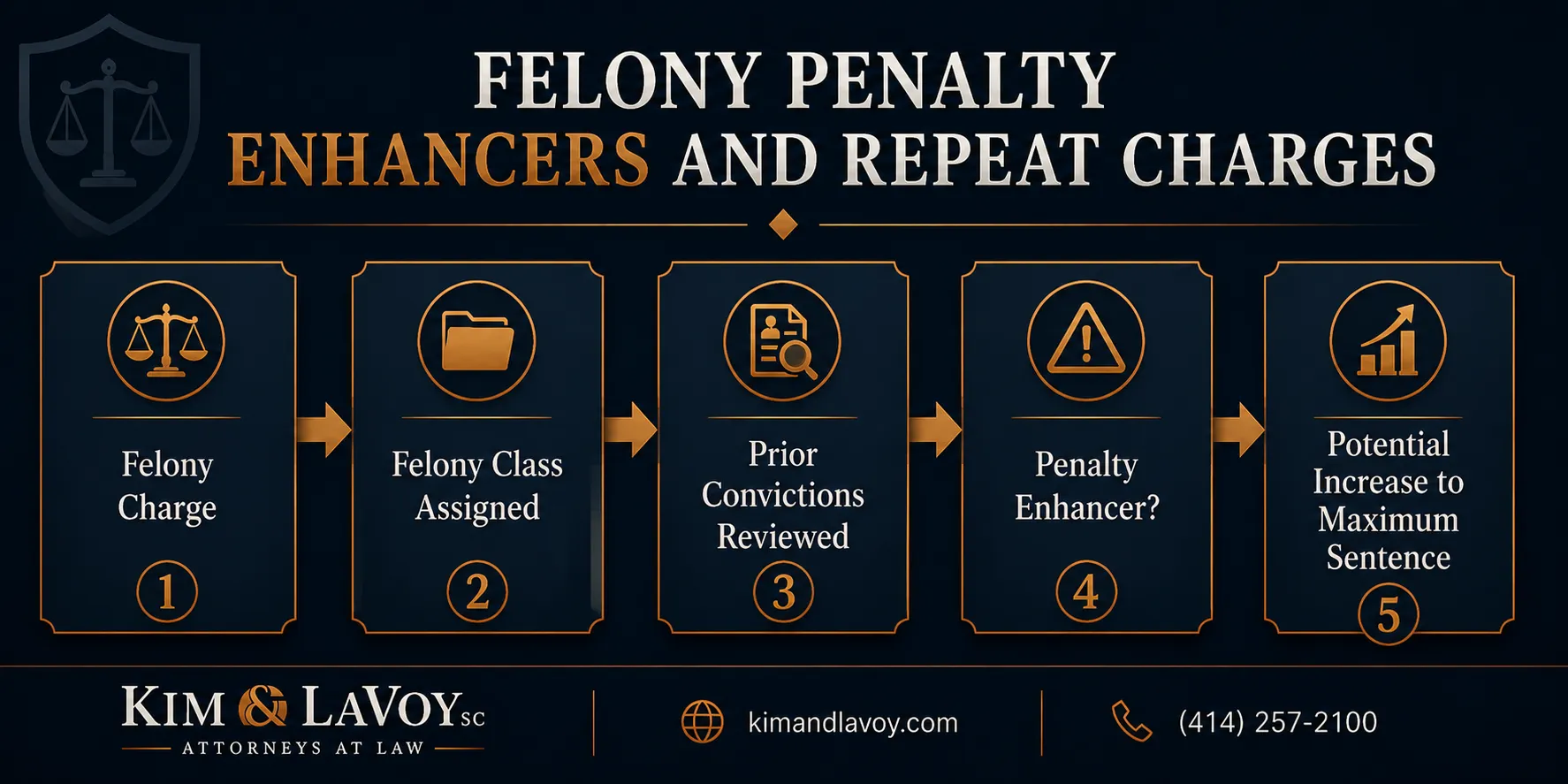
A felony class sets the base penalty, but it is not always the final word. Wisconsin Statute § 939.62 lets a judge raise the maximum sentence for habitual criminality when someone has a qualifying prior conviction. It’s part of why repeat OWI offenses escalate quickly in Wisconsin, and it works on a similar principle across other felony and misdemeanor charges.
“They’re mandatory penalties. So people can look online these days and see those penalties. And a lot of times they’ll call basically just thinking, well, this is what’s going to happen to me, right?”
Being charged with a felony that carries a mandatory minimum, or one exposed to a penalty enhancer, does not mean the maximum penalty is the outcome. It means the stakes for getting the right legal strategy in place go up.
What a Felony Conviction Means Beyond Prison Time
A felony conviction in Wisconsin results in a permanent criminal record that follows a person past release. Wisconsin Statute § 941.29 makes it a separate Class G felony for anyone with a prior felony conviction to possess a firearm. Voting rights are suspended for the length of the sentence, including extended supervision. Voting rights are restored automatically under Wisconsin Statute § 304.078 once supervision ends, though a person must register again before voting. Employment opportunities get harder to find. Background checks turn up felony convictions easily, and some professional licenses require disclosure once a felony is on record.
“What you don’t want to happen is later on down the line, when bad things are happening to you, you’re denied job opportunities, you’re denied loans, you don’t realize how many doors closed on you because you didn’t handle the case properly the first time around.”
If a felony conviction is already on the table, understanding what’s at risk changes the next decision.
How an Experienced Attorney Can Affect Your Felony Case
The felony class attached to a charge is not always where the case ends. A criminal defense attorney who knows how a prosecutor’s office actually works can find issues with burden of proof, challenge how evidence was collected, or negotiate an amendment to a different offense that carries a lower class and avoids a mandatory prison term.
“Better attorneys are able to get better deals. That’s what it comes down to.”
Julius Kim built his early career as a Milwaukee County prosecutor and trained officers at the police academy before founding Kim & LaVoy S.C. He knows how a felony case gets built from the inside, and where it can come apart. Reaching out before charges are filed, through pre-charge representation, gives an attorney the most room to work.
Facing a Felony Charge in Wisconsin
A felony charge in Wisconsin can feel like it swallows everything else happening in your life, but the class attached to your case is a starting point, not a verdict. What happens between now and sentencing, who negotiates on your behalf, and how early you get help all shape where this lands.
“Get the attorney up front, make sure that everything is taken care of, and make sure that you are getting the best possible result you can.”
Kim & LaVoy S.C. handles felony cases across Milwaukee, Brookfield, Waukesha, Wauwatosa, West Bend, West Allis, and the rest of Wisconsin.
Frequently Asked Questions About Wisconsin Felony Classes
What is the most serious felony class in Wisconsin?
Class A is the most serious felony class in Wisconsin, covering violent crimes like first-degree intentional homicide, and it carries a mandatory life sentence. [Wis. Stat. § 940.01] Class B follows with a maximum of 60 years in prison and no fine. [Wis. Stat. § 939.50]
Is there a Class U felony in Wisconsin?
No official Class U felony exists under Wisconsin Statute § 939.50, which only lists Class A through Class I. A “U” notation on a court record usually points to an unclassified felony, and its penalty is written directly into the statute that defines the crime.
How many felony classes does Wisconsin have?
Wisconsin has nine classifications of felony classes, labeled A through I. Class A carries the harshest penalty, life imprisonment, and penalties decrease down to Class I, with a maximum of 3.5 years in prison. [Wis. Stat. § 939.50]
Can a felony charge be reduced to a misdemeanor in Wisconsin?
Sometimes. A prosecutor can agree to amend a felony down to a misdemeanor during negotiation, depending on the facts, the person’s criminal history, and the strength of the evidence. It is one reason an experienced criminal defense attorney matters early on.
How does a prior conviction affect felony sentencing in Wisconsin?
A prior conviction can trigger a penalty enhancer under Wisconsin Statute § 939.62, letting a judge raise the maximum sentence beyond what the felony class alone allows. That is why repeat charges carry more risk than a first offense.
What should I do if I am charged with a felony in Wisconsin?
Contact a defense attorney before you say anything else to police or prosecutors, and do it as soon as possible after an arrest or charge.
Legal Disclaimer
The information provided in this article is for general informational purposes only and does not constitute legal advice. Every criminal case is unique, and the facts of your specific situation may result in different outcomes than those described here. Reading this content does not create an attorney-client relationship between you and Kim & LaVoy S.C. or any of its attorneys. Wisconsin law is complex and subject to change. For legal advice tailored to your individual circumstances, please contact Kim & LaVoy S.C. directly to schedule a consultation.