
Reckless Driving in Wisconsin: Charges, Penalties, and What Comes Next

A reckless driving Wisconsin charge is not always a traffic ticket. It can carry criminal penalties, including jail time and a permanent record. The charge classification for how your vehicle was being operated determines what you are actually facing.
Wisconsin’s reckless driving laws treat a reckless driver differently depending on prior offenses, whether anyone was injured, and whether drugs or alcohol were involved. That distinction separates a civil forfeiture from a criminal conviction. If you have been cited for a traffic violation in Wisconsin, understanding those categories matters.

“I think the big surprise that people have is that, boy, in Wisconsin, a lot of times things that seem not so big a deal are treated very seriously.”
Key Takeaways
- Reckless driving means operating a motor vehicle with willful or wanton disregard for the safety of persons or property.
- A first reckless driving offense with no injury is a civil forfeiture. A second offense within four years is a criminal misdemeanor.
- Reckless driving causing injury to another person is a Class A misdemeanor, carrying up to 9 months in jail and fines up to $10,000.
- Reckless driving causing great bodily harm is a Class F felony under Wisconsin Statute § 346.62(4), with up to 6 years in prison and fines up to $25,000.
- No single miles per hour threshold automatically triggers a reckless driving charge. Officers evaluate the full context of how the vehicle was operated and the driver’s conduct.
What Is the Legal Definition of Reckless Driving in Wisconsin?
Wisconsin Statute § 346.62 defines reckless driving as operating a motor vehicle with willful or wanton disregard for the safety of persons or property. Willful disregard separates a reckless driver from one facing a negligent driving charge.
Negligent driving involves inattention, while reckless driving requires a conscious choice to disregard a known risk. It does not require a collision to be regarded as a criminal offense. A vehicle operator who ignores traffic signals and red lights at high speed through active traffic may be charged with a moving violation based on driving conduct and traffic conditions alone.
What is a Reckless Driving Charge? Real Examples in Wisconsin
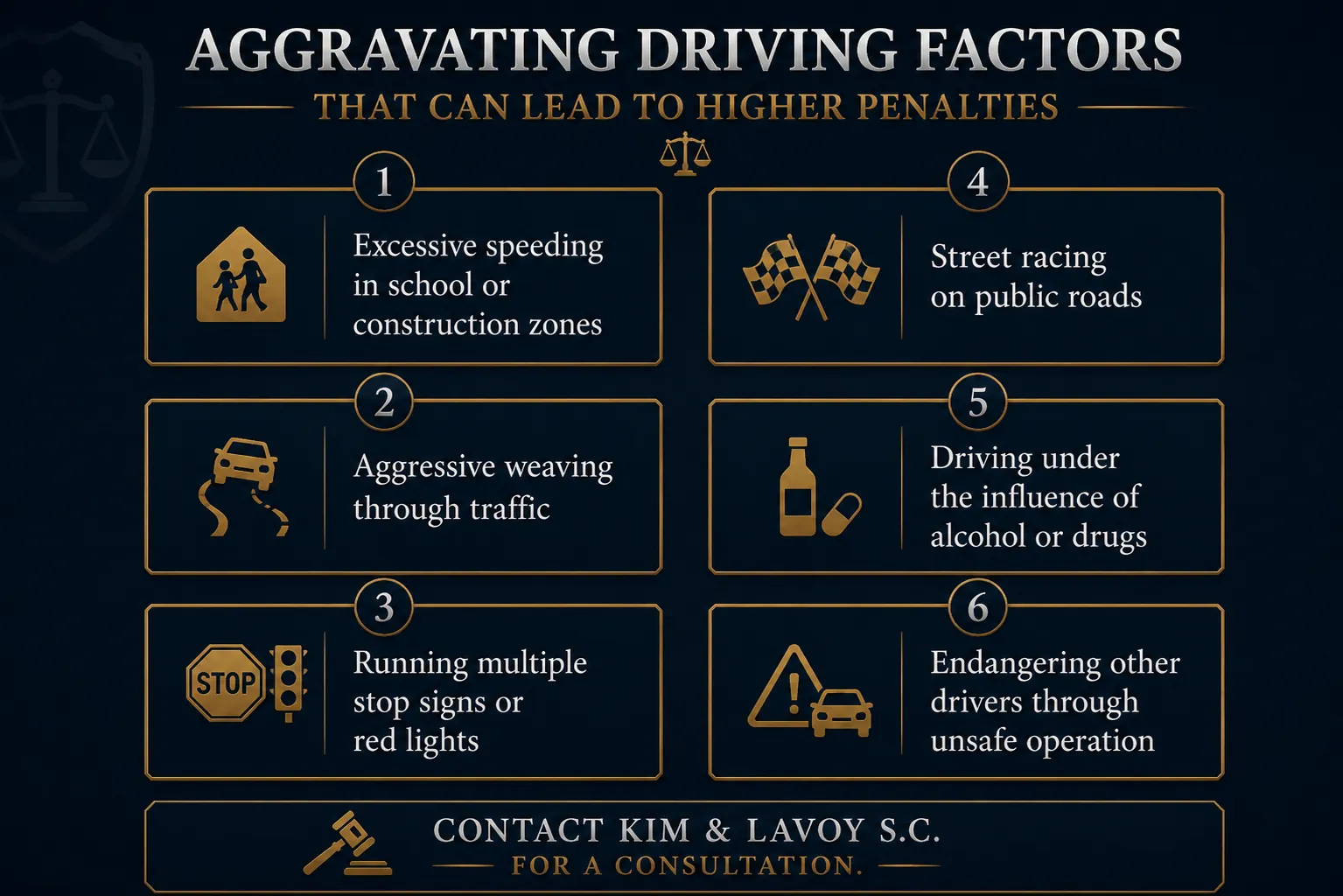
Wisconsin courts look at the totality of how a vehicle was operated. Common examples that result in a reckless driving charge include:
- Excessive speeding through a school zone or construction area where other vehicles and pedestrians are present.
- Aggressive driving behaviors, such as weaving between vehicles at high speed without signaling.
- Running multiple stop signs or red lights in succession while in active traffic.
- Street racing on public roads, which can produce a Class B misdemeanor under Wisconsin Statute § 346.94.
- Driving under the influence of alcohol or drugs or in a manner that endangers other drivers.
OWI and reckless driving are often charged together when alcohol contributed to a motor vehicle incident. The drunk driving defense team at Kim & LaVoy handles both and understands how prosecutors approach combined cases.
When Does Speeding Become Reckless Driving in Wisconsin?
Wisconsin’s reckless driving laws set no fixed miles per hour threshold that automatically converts a speeding ticket into a reckless driving charge. A law enforcement officer evaluates a vehicle’s miles per hour relative to the posted speed limit, road conditions, traffic density, and whether the speed shows willful disregard for other drivers. Excessive speeding is a factor in many reckless driving cases, but context determines whether it meets the criminal standard.
Under Wisconsin Statute § 343.303, exceeding the posted speed limit by 25 miles per hour triggers a license suspension separate from any reckless driving criminal charge. Speeding well above the posted speed limit also serves as prima facie evidence of recklessness when a vehicle passes through a school zone or construction area.
Wisconsin Reckless Driving Penalties: What Are the Consequences?
Penalties for reckless driving in Wisconsin escalate based on prior offenses, the speed at which the vehicle was operated, property damage, and whether an accident resulted in someone being injured:
| Offense | Classification | Max Jail/Prison | Max Fine |
|---|---|---|---|
| First offense, no injury | Civil forfeiture | None | $25 to $400 plus mandatory surcharges |
| Second offense within 4 years, no injury | Criminal misdemeanor | Up to 6 months | Up to $1,000 |
| Causing bodily injury to another person | Class A misdemeanor | Up to 9 months | Up to $10,000 |
| Causing great bodily harm | Class F felony | Up to 6 years | Up to $25,000 |
Beyond fines and jail time, a reckless driving conviction adds demerit points under the Wisconsin DOT point system, affecting driving privileges, insurance rates, and the driver’s ability to maintain a clean record. A guilty motor vehicle driver operating a commercial vehicle also risks commercial driver’s license loss under federal regulations.
These potential consequences can create fear and anxiety.
“A lot of times, people panic, right? And then after something like this happens, they panic, they start getting online, they start doing their own research, and they actually might end up making their case worse for themselves… What I always try to tell people is just freeze the situation, take a deep breath, and then call someone who can give you clear advice and guidance so that you can make decisions about what to do next with a clear head.”
Is Reckless Driving a Felony in Wisconsin?
Yes. The charge becomes a felony rather than a misdemeanor when a vehicle involved in reckless driving caused great bodily harm to another person, regardless of the speed limit at the time. This carries higher penalties.
Wisconsin law draws a clear line between “bodily injury” and “great bodily harm.” Bodily injury means physical pain or impairment. Great bodily harm means a substantial risk of death, permanent disfigurement, or permanent loss of function of a body part or organ.
When an accident results in great bodily harm, the charge becomes a Class F felony under Wisconsin Statute § 346.62(4), and the person convicted faces other penalties of up to six years in prison and fines up to $25,000.
Factors That Can Make a Reckless Driving Charge More Serious
Several factors can escalate the severity of a reckless driving charge in Wisconsin:
- A prior reckless driving conviction within four years, upgrading a civil forfeiture to a criminal misdemeanor.
- Operating a vehicle under the influence of alcohol or drugs.
- OWI penalties escalate for repeat offenses in Wisconsin.
- Operating a commercial motor vehicle recklessly, which adds federal consequences.
- The vehicle was operated through a school zone or construction zone where public safety is most at risk.
- Property damage or bodily injury to another person resulting from the accident, regardless of intent.
Julius Kim spent years as a Milwaukee County prosecutor and trained police officers at the academy, giving the firm a direct understanding of how law enforcement evaluates reckless driving cases. He can provide crucial information and advice to positively influence the outcome and potential penalties.
Common Reckless Driving Defense Strategies in Wisconsin Cases
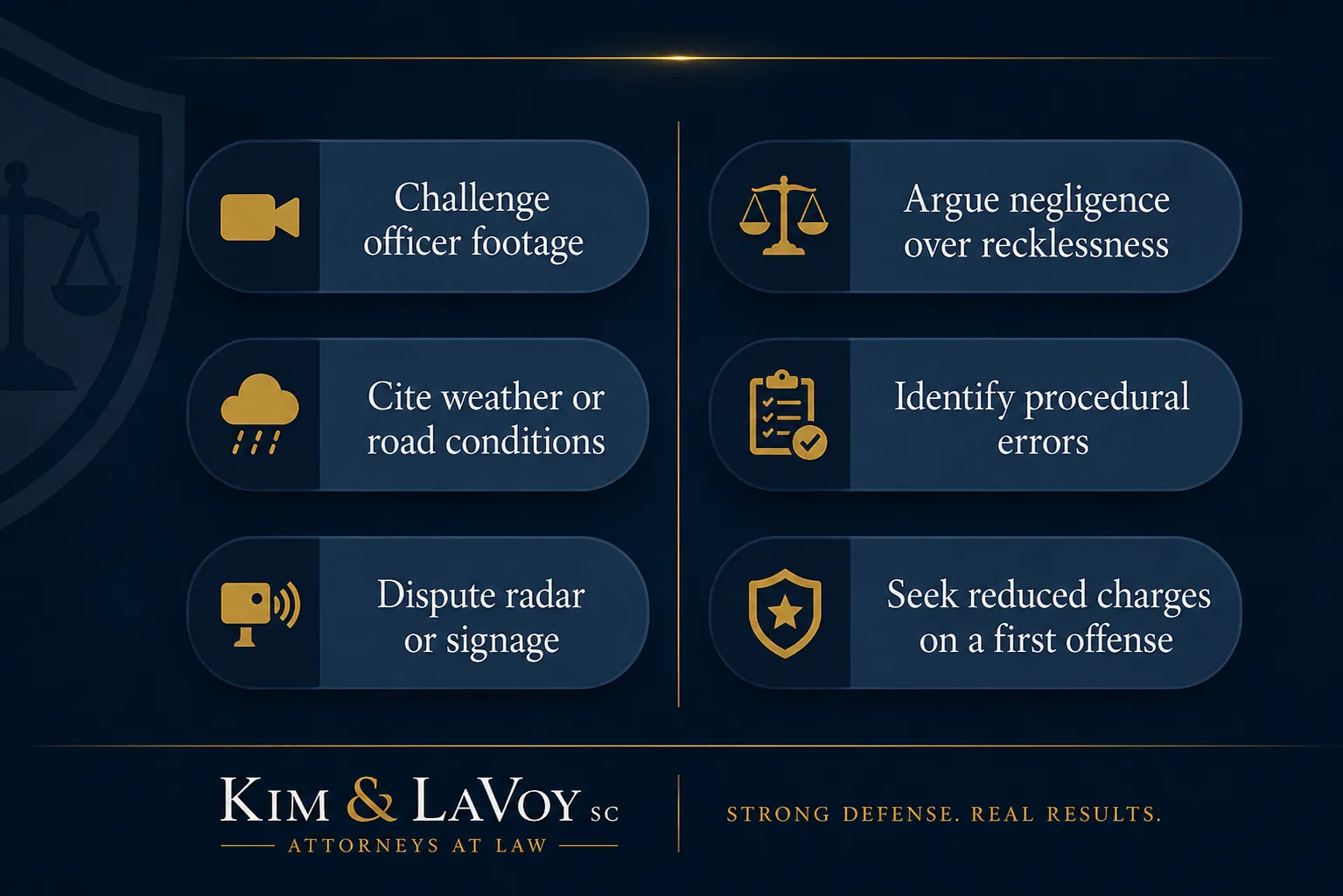
A strong defense is essential because the prosecution must prove the driver acted with willful disregard for safety in the circumstances. Knowing your right to remain silent during police contact is also a critical early step.
Common legal options include:
- Challenging law enforcement officer observations using dashcam and bodycam footage from the stop
- Arguing that road or highway conditions, weather, or other vehicles contributed to the incident
- Disputing radar accuracy or whether the speed limit was properly signed at the incident location
- Questioning whether the conduct of the person driving showed reckless disregard versus ordinary negligence, which carries lower penalties as a traffic infraction
- Identifying procedural errors during the traffic stop or subsequent investigation
- Negotiating a charge reduction on a first offense where the evidence is limited
“While we can’t guarantee what’s going to ultimately happen in your case, what we can guarantee is the best result you can expect under the circumstances.”
Facing a Reckless Driving Charge in Wisconsin?
A reckless driving Wisconsin charge carries real consequences, whether the vehicle was cited for excessive speed, aggressive driving, or an accident resulting in injury to another person. Every driver deserves a clear, honest picture of what the charge means for their safety, their record, and their future.
Kim & LaVoy S.C. handles criminal defense exclusively in several practice areas.
Frequently Asked Questions About Reckless Driving Wisconsin
Will a reckless driving conviction show up on a background check?
Yes, when the conviction is a criminal offense. A second offense, reckless driver, or any driver convicted after an accident involving injury, faces penalties that include a criminal record visible to employers, landlords, and licensing boards.
Can I be charged with reckless driving on private property in Wisconsin?
Private property generally falls outside the scope of reckless driving, though other charges may apply if operating a vehicle created a public safety risk.
Can a reckless driving charge be reduced or dismissed?
Yes, particularly for first-time offenders and cases where evidence of reckless disregard is limited or officer conduct during the stop was procedurally flawed. No attorney can guarantee an outcome, but representation changes what circumstances prosecutors are willing to consider.
How long does a reckless driving conviction stay on my Wisconsin driving record?
Demerit points affect your record during a rolling 12-month window, but the conviction itself stays on your motor vehicle record for five or more years, and a criminal conviction can appear on background checks indefinitely.
Does reckless driving affect car insurance rates in Wisconsin?
Yes. Insurers treat a reckless driving conviction as a high-risk indicator, which typically produces sharply higher premiums and may result in non-renewal. Wisconsin operates under a fault-based insurance system, so a reckless driver who caused an accident may also face civil liability for injured parties’ medical bills and lost wages.
If I were charged with reckless driving and OWI at the same time, which charge takes priority?
Both charges are prosecuted simultaneously with separate penalties that can stack, and an attorney handling both areas can evaluate how the charges interact across each vehicle offense and where the strongest defense arguments exist.
Legal Disclaimer:
The information on this page is for general informational purposes only and does not constitute legal advice. Reading this content does not create an attorney-client relationship between you and Kim & LaVoy S.C. Wisconsin law is complex and subject to change. Every case is different. Contact a qualified attorney to discuss the specific facts of your situation.